
Hurry—our Last Minute Stocking Stuffer Sale is your final chance to get 30% off and free shipping on orders over $35! Order by 12/14 to ensure delivery just in time for Christmas Eve. Don’t miss out on these festive favorites!

A classic margarita is a three-element system: spirit, acid, sweet. Add pineapple and chili and you haven’t just added ingredients—you’ve added a fourth dimension of heat and transformed the drink’s structural logic entirely. Most recipes treat this as a simple swap. The results usually taste like it.
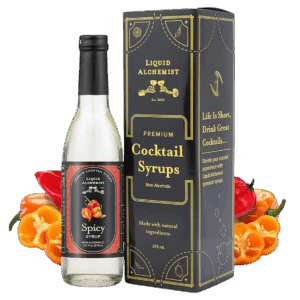
Liquid Alchemist Spicy Habanero solves the core problem with spicy margaritas: heat consistency.
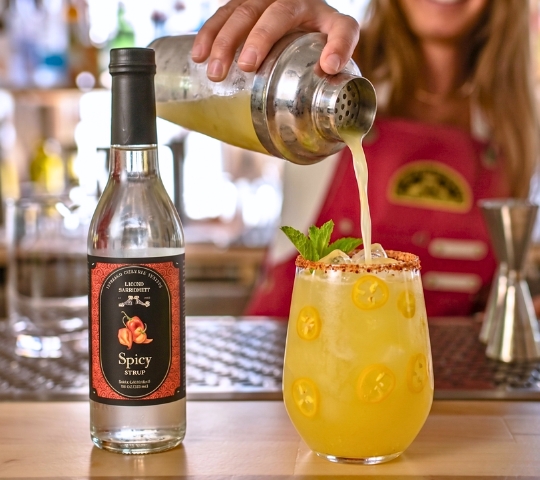
Muddled jalapeño varies batch to batch; infused tequila is a commitment; a chili syrup calibrated for cocktails gives you precise, repeatable control over every drink you pour. Below is the full recipe, the flavor science behind the sweet-heat balance, and every method for adjusting intensity.
The margarita has contested origins—as VinePair documents, competing creation stories range from a 1938 Tijuana bar to a 1948 Acapulco party to a 1945 Jose Cuervo ad campaign. What isn’t contested is its structure: tequila’s agave backbone, lime’s acidity, and a sweetener to balance both. That three-part tension makes the margarita more heat-tolerant than almost any other cocktail.
Capsaicin—the compound responsible for chili heat—activates TRPV1 receptors that register heat and pain. As documented in PMC research on capsaicin, the molecule is lipophilic and hydrophobic, which means water doesn’t neutralize it but sugar and fat can interrupt receptor binding. In a margarita, the sweetener performs double duty: it balances lime acidity and simultaneously modulates the chili heat, which is why a well-sweetened spicy margarita reads as complex rather than punishing.
This version uses habanero syrup as the controlled heat element, with pineapple contributing both sweetness and the bromelain-driven acidity that makes it a natural fit for the margarita’s citrus framework.
Rub a lime wedge around the glass rim, then roll in chili salt. Combine all ingredients in a shaker with ice. Shake vigorously for 10–12 seconds. Strain over a large ice cube in the prepared glass. Garnish with a dehydrated pineapple slice and a thin jalapeño round.
Element | Ingredient | Role |
Sweet | Spicy syrup + passion fruit | Modulates heat, adds body |
Sour | Lime juice + pineapple juice | Brightens, refreshes palate |
Spirit | Blanco tequila | Backbone and agave character |
Heat | Habanero syrup | Complexity and finish |
The pineapple and passion fruit occupy the sweet position together—each contributing acidity alongside sweetness, which is why juice-only versions typically over-sweeten without adding structure. Flavor pairing research confirms that tart tropical compounds share aromatic bridges with agave’s vegetal esters, making pineapple and passion fruit more integrated with tequila than citrus juice alone.
Combining pineapple with chili and citrus isn’t a modern cocktail trend—it’s one of the oldest flavor traditions in Mexican food culture. Tepache, the pre-Columbian fermented pineapple drink still sold by street vendors across Mexico, has been seasoned with chili powder for centuries. The Nahua people were combining pineapple, spice, and citrus long before the margarita existed.
This context matters for the recipe. The sweet-tart-spicy combination in a pineapple margarita isn’t an unlikely fusion—it’s an extension of a flavor tradition with deep indigenous roots. The habanero is native to the Yucatán peninsula; pineapple is native to South America and was cultivated throughout pre-Columbian Mesoamerica. These ingredients belong together in a way that imported flavor combinations don’t.
Habanero registers between 100,000 and 350,000 Scoville Heat Units—significantly hotter than jalapeño (2,500–8,000 SHU) or serrano (10,000–23,000 SHU). The syrup dilutes and calibrates that heat, but the adjustment range matters.
For a milder build, reduce Spicy Habanero to ¼ oz and increase passion fruit to ¾ oz. The fruit sweetness compensates while the residual heat reads as warmth rather than burn. For a hotter build, increase Spicy Habanero to ¾ oz and reduce passion fruit to ¼ oz—the heat will be front-loaded rather than distributed through the drink’s finish.
Method | Heat Profile | Control Level |
Chili syrup | Even, consistent, calibrated | High |
Muddled jalapeño | Sharp, fresh, variable | Low |
Infused tequila | Deep, pervasive, difficult to reduce | Very low |
Chili salt rim | Surface only, fades quickly | Medium |
Chili syrup is the professional standard for a reason: it produces the same drink every time. The chili rim adds a complementary surface heat that reinforces the syrup on entry without competing with it—use both for maximum effect.
The base recipe is a system, not a fixed formula. The sweet, sour, spirit, and heat positions can all be adjusted without breaking the drink’s architecture.
Liquid Alchemist Mango at ¼ oz alongside Passion Fruit softens the heat naturally—mango’s brix and tropical density absorb capsaicin’s sharpness more effectively than neutral sweeteners. The result is a rounder, less aggressive build that retains the habanero’s complexity without leading with burn.
Liquid Alchemist Coconut at ¼ oz alongside Spicy Habanero produces a creamy-tropical variation where the fat compounds in coconut syrup directly interrupt capsaicin binding—the science of why dairy cools spice works identically with coconut’s lipid content. Use reposado rather than blanco tequila for this variation; the oak notes complement the coconut and round the habanero’s sharp edges.
For more tequila-forward recipe builds and technique, grab our free cocktail guide and keep building.
Most spicy pineapple margarita recipes rely heavily on pineapple juice as their primary sweetener. The problem is consistency: pineapple juice sugar content varies significantly by brand and ripeness, which means the heat-to-sweet ratio shifts with every bottle. A drink balanced at 2 oz of one pineapple juice can read as too sweet or too spicy with a different brand.
A calibrated syrup removes that variable. The pineapple juice in this recipe contributes tropical acidity and the bromelain enzyme texture—not sweetness. The sweetness comes from the syrup, where it can be measured precisely. This is the same logic that separates a well-built cocktail from an improvised one: control over every element, not just the spirit.
The best spicy margarita doesn’t announce its heat—it distributes it across the palate alongside the pineapple’s sweetness and lime’s brightness, so each sip ends warmer than it began. That progression is what distinguishes a structured build from a jalapeño-in-tequila shortcut.
The Liquid Alchemist Margarita 3-Pack includes Spicy Habanero alongside two other margarita-ready syrups for the full range of builds. Use code TRYUS for 25% off plus free shipping on your first order.
A classic margarita is a three-element system: tequila, lime, and a sweetener. Adding pineapple and chili introduces a fourth dimension—heat—that changes how the drink is balanced. The sweetener now has to manage both the lime’s acidity and the capsaicin’s burn, which is why spicy margaritas require more precise ingredient ratios than their classic counterparts.
With a syrup-based recipe, heat is directly adjustable at the measure level. Increasing habanero syrup by ¼ oz produces a noticeably hotter drink; reducing it by ¼ oz and compensating with more passion fruit or mango syrup softens the heat while maintaining sweetness. This precision isn’t possible with muddled chili, where heat extraction varies with muddling pressure, contact time, and the individual pepper’s capsaicin content.
Habanero has a fruity, floral heat profile that pairs naturally with pineapple’s tropical sweetness—the aromatic compounds complement each other rather than competing. Jalapeño produces a sharper, more vegetal heat that reads as fresh and clean but lacks the aromatic complexity habanero brings. For a spicy pineapple margarita specifically, habanero’s flavor profile is the more integrated choice.
Pineapple adds both sweetness and acidity—it’s not a neutral ingredient in either direction. In this recipe, it functions more as a citrus extender than a sweetener, with the bromelain enzyme contributing a textural softness to the shaken drink. The sweetness is controlled by the syrup measures rather than the juice volume, which is why the recipe uses only 1 oz of pineapple juice rather than the 2–3 oz that juice-forward versions typically call for.
Blanco (unaged) tequila is the standard choice—its clean agave character reads clearly alongside the fruit and heat without adding competing oak or vanilla notes from barrel aging. Reposado works well in the coconut variation, where its softer profile complements the coconut syrup. Avoid heavily aged añejo tequila, which tends to compete with rather than support the tropical elements.
The recipe scales cleanly for pitchers. Combine tequila, lime juice, syrups, and pineapple juice without ice and refrigerate up to 24 hours. Shake individual servings over ice rather than pre-diluting the batch. The chili salt rim should be applied per glass at service—it degrades if applied to glasses in advance. For a crowd of 8, multiply all measures by 8 and keep the batch covered and cold until serving.
The chili rim adds genuine surface heat that registers on entry—before the drink itself reaches the palate. It functions as a primer: the rim’s salt draws saliva and activates the capsaicin before the first sip, which means the drink’s internal heat registers against an already-sensitized palate. The result is a perceived heat that exceeds what the syrup alone would deliver, which is why a strong chili rim can make a mild build read as medium and a medium build read as hot.

Hurry—our Last Minute Stocking Stuffer Sale is your final chance to get 30% off and free shipping on orders over $35! Order by 12/14 to ensure delivery just in time for Christmas Eve. Don’t miss out on these festive favorites!
Get notified about new articles
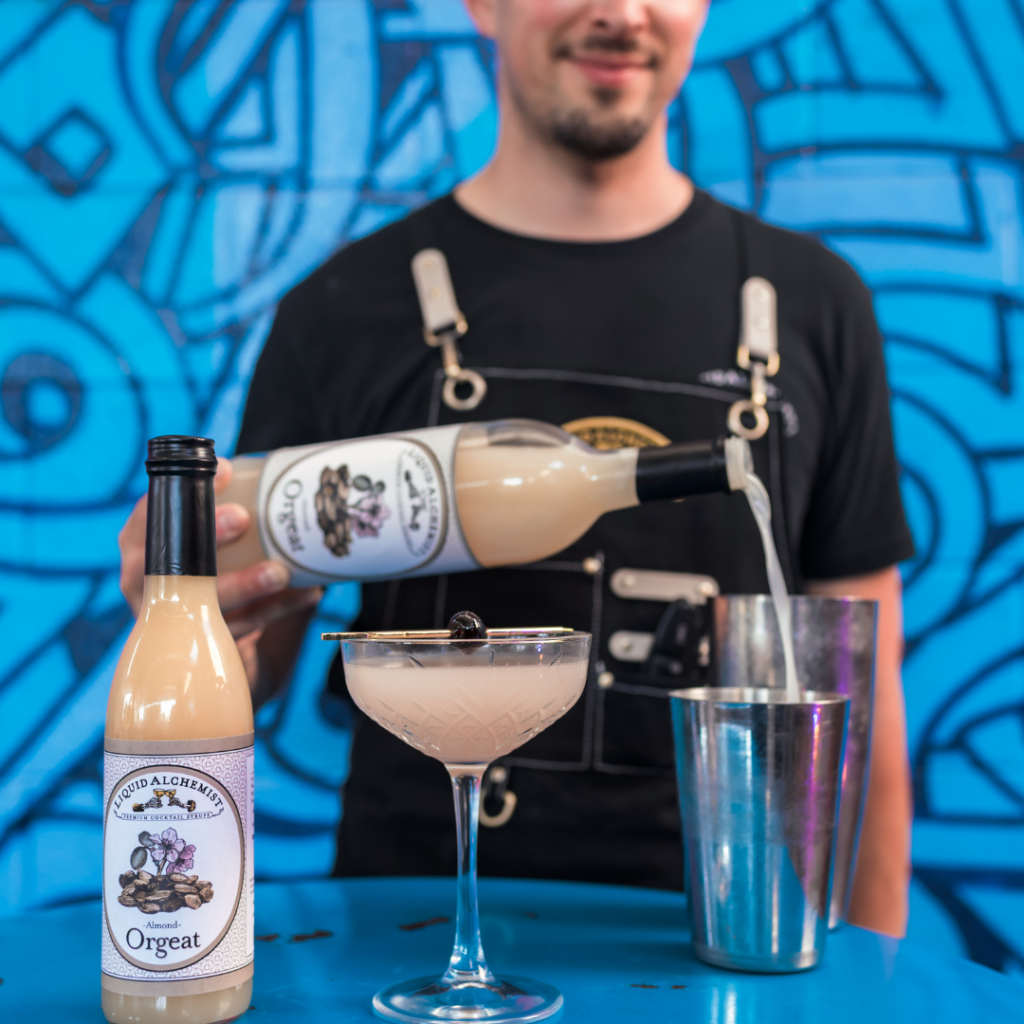

Margarita Day Special
25% Off Prickly Pear, Blood Orange, Passion Fruit, Peach, Tamarindo, Strawberry, & Mango February 22 only
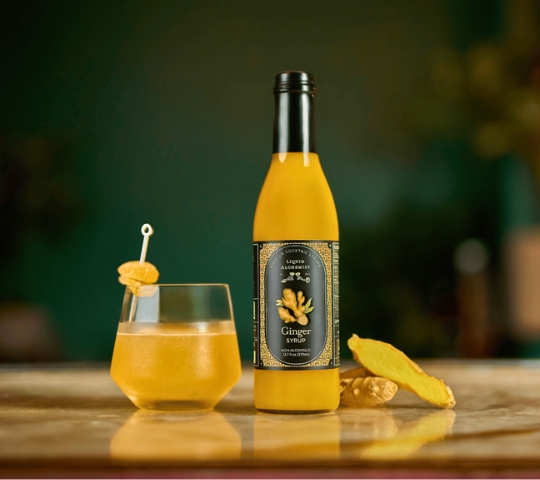
Kick off the new year with our Dry January Sale! From 12/27-1/15, enjoy 25% off on all featured flavors in our Dry & Damp Cocktail Guide, perfect for crafting delicious non-alcoholic and low-ABV drinks to help you start the year refreshed and on trend!
CODE: SMBIZ
CODE: BLKFRI