
Hurry—our Last Minute Stocking Stuffer Sale is your final chance to get 30% off and free shipping on orders over $35! Order by 12/14 to ensure delivery just in time for Christmas Eve. Don’t miss out on these festive favorites!

The spritz is one of the oldest living cocktail formats—Austrian soldiers diluting Venetian wine with a splash of water in the 1800s, the word “spritz” itself from the German spritzen, to splash. As Wine Enthusiast’s spritz history documents, the modern version—prosecco, bitter aperitivo, soda water—is structurally unchanged from the Venetian original. What blood orange changes is the flavor register: the addition moves the drink’s citrus note from Aperol’s orange peel bitterness into something richer, berry-adjacent, and visually far more striking.
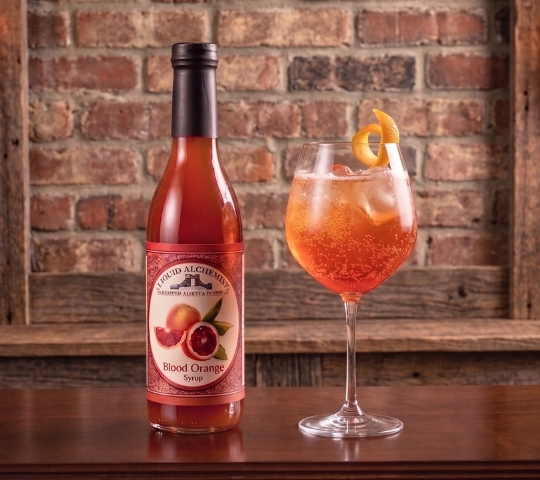
Liquid Alchemist Blood Orange provides that shift at a single measure—concentrated flavor, deep ruby color, and calibrated sweetness at ½ oz rather than the variable sugar of fresh juice. Below is the full recipe, the aperitif philosophy behind why the spritz works, and every variation from a passion fruit riff to a party pitcher.
An aperitif is defined by its function, not its ingredients. As Masterclass’s aperitif guide explains, the word comes from the Latin aperire—”to open”—and a proper aperitif stimulates appetite rather than satisfying it. This means lower alcohol, bitter or acidic components, and light effervescence that refreshes the palate rather than loading it.
The spritz hits all three conditions simultaneously: prosecco keeps the ABV moderate, Aperol’s gentian and rhubarb bitterness primes the digestive system, and the soda water’s carbonation cleansing creates that “opening” sensation. Blood orange syrup replaces the plain orange slice garnish of a classic Aperol Spritz with an active flavor ingredient—contributing structured sweetness, berry-citrus depth, and the anthocyanin compounds that give it both its color and its complexity.
The classic spritz ratio is 3-2-1: three parts prosecco, two parts aperitivo, one part soda. This version adjusts that formula for the blood orange syrup’s concentrated sweetness.
Build in a large wine glass over ice. Add Aperol and blood orange syrup first, then prosecco, then soda water. Add the syrup before the sparkling elements—it settles to the base and creates a visible gradient as the prosecco disperses it upward. Stir once, gently. Garnish with a dehydrated blood orange wheel and a rosemary sprig.
Element | Classic Aperol Spritz | Blood Orange Spritz |
Citrus source | Aperol’s orange peel | Aperol + blood orange syrup |
Color | Amber-orange | Deep ruby-orange gradient |
Sweetness | Aperol’s built-in sugar | Calibrated via syrup measure |
Berry note | Absent | Anthocyanin-derived raspberry |
Bitterness | Moderate | Slightly softened |
Visual impact | Consistent amber | Color gradient on build |
Most blood orange spritz recipes simply add fresh squeezed juice. The result is an increase in volume and sugar that disrupts the 3-2-1 ratio—the drink becomes diluted and sweet without gaining the concentrated berry-citrus complexity that makes blood orange worth using.
As University of Florida’s IFAS research on blood orange anthocyanins documents, blood orange’s berry compounds develop under specific temperature conditions and provide aromatic complexity—not just color. At ½ oz, the syrup delivers those compounds at a concentrated measure that keeps the drink’s carbonation intact and the ratio structurally sound. The color gradient develops because the syrup is denser than the prosecco, settling at the base before being slowly dispersed by the bubbles—an effect fresh juice, which integrates immediately, can’t replicate.
Liquid Alchemist Passion Fruit at ¼ oz alongside the blood orange syrup extends the tropical-citrus register without adding sweetness. Passion fruit’s tartness reinforces the Aperol’s bitterness rather than competing with it, producing a more acidic, less sweet version of the base recipe. This variation works particularly well for guests who find the classic Aperol Spritz too sweet—the combined acidity of passion fruit and blood orange balances the prosecco’s residual sugar more completely.
Liquid Alchemist Ginger at ¼ oz replaces half the blood orange measure for a spiced, warming variation. The ginger heat provides an edge that cuts the prosecco’s sweetness and adds complexity beyond the standard bittersweet aperitivo profile. This version reads less as a summer drink and more as a year-round aperitif—suited to cool evenings when the standard spritz feels too light.
Replace Aperol with ½ oz non-alcoholic bitter aperitivo (Lyre’s or similar) and replace prosecco with sparkling white grape juice plus a squeeze of fresh lemon. Maintain the blood orange syrup at ½ oz and soda water at 1 oz. The visual is identical to the cocktail version in a wine glass—the color gradient, the garnish, and the effervescence all carry through. For more zero-proof and spritz-style builds, grab our free cocktail guide.
The spritz’s built-not-shaken format makes it ideal for pitchers—no emulsification required, no technique beyond combining ingredients in the right order.
Combine Aperol and blood orange syrup in a large pitcher. Add prosecco slowly down the side of the pitcher to minimize bubble loss. Add soda water per glass at service rather than to the pitcher—carbonation degrades quickly in a large-format container. Garnish the pitcher with dehydrated blood orange wheels and fresh rosemary. Pour over large ice cubes, never crushed ice, which over-dilutes within minutes.
The aperitif function of the spritz makes it a natural companion to food served before a meal—its bitterness and acidity prime the palate rather than satisfying it. Salty, savory finger foods work best: brined olives, prosciutto, aged parmesan, bruschetta, or a simple charcuterie selection. The blood orange’s berry notes extend to cheese pairings—soft goat cheese and aged manchego both complement the citrus-bitter profile.
For brunch service, the blood orange spritz pairs cleanly with egg dishes, particularly those with herbed or citrus components. Eggs Benedict, frittata, or smoked salmon with crème fraîche all let the spritz’s bitterness provide contrast rather than competing with sweet brunch fare.
A blood orange spritz delivers something the classic Aperol Spritz doesn’t attempt: a drink where the color gradient is a flavor signal rather than marketing. The ruby base isn’t dye—it’s anthocyanins from a citrus that only develops them under specific growing conditions, making the color a genuine indicator of the ingredient’s quality and complexity.
The Tropical Soda Trio includes Blood Orange alongside the core Liquid Alchemist range—the right starting point for anyone building a home bar around natural fruit syrups. Use code TRYUS for 25% off plus free shipping on your first order.
A spritz is a sparkling aperitif cocktail built around three components: a sparkling wine (typically prosecco), a bitter liqueur or aperitivo (Aperol, Campari, or similar), and soda water. The format originated in the Veneto region of Italy during the Austrian occupation in the 1800s and evolved into its modern form after Aperol’s introduction in 1919. The classic ratio is 3 parts prosecco, 2 parts aperitivo, 1 part soda water—low in alcohol, bittersweet, and effervescent.
Blood orange contributes a deeper, berry-adjacent citrus profile compared to standard orange. Its anthocyanin compounds produce a raspberry or pomegranate-like secondary note alongside the citrus brightness, which softens Aperol’s bitterness and adds complexity without sweetening the drink. The flavor reads as more complete than plain orange—the berry register and citrus register coexist rather than one dominating.
Fresh juice works but disrupts the spritz’s structure by adding volume and variable sugar content. A 2 oz pour of juice shifts the 3-2-1 ratio and dilutes the carbonation. Blood orange syrup at ½ oz provides concentrated flavor without volume, keeps the ratio intact, and creates the visible color gradient at the base of the glass that fresh juice—which integrates immediately—cannot replicate.
Three practices preserve carbonation: use large ice cubes rather than crushed ice (larger surface area melts more slowly), build in the glass rather than shaking or stirring aggressively, and add soda water last and directly down the side of the glass. For pitcher service, add soda water per glass at service rather than to the batch. A pre-chilled glass also extends carbonation by keeping the temperature consistent.
A dehydrated blood orange wheel on the rim is the most visually striking option and communicates the ingredient immediately. Fresh rosemary adds aromatic contrast—its piney resin complements blood orange’s berry notes without competing. For brunch service, an edible flower alongside the rosemary adds a floral visual layer. Avoid orange slices in the glass, which dilute the drink as they macerate—garnish above the rim or on the rim only.
Both, but for different reasons. At brunch, the lower ABV and refreshing citrus-bitter profile work well alongside food and as an opening drink before heavier options. For evening aperitivo, the drink’s bitterness functions as intended—stimulating appetite before a meal rather than satisfying it. The blood orange’s deeper, more complex flavor profile actually reads more sophisticated in the evening, which makes it slightly more versatile than a standard Aperol Spritz.
The Aperol and blood orange syrup base can be combined and refrigerated up to 24 hours. Add prosecco no more than one hour before serving—it loses carbonation quickly even in a covered container. Add soda water per glass at service only. The blood orange syrup’s color deepens slightly overnight, which improves the visual gradient when the prosecco is added at service.

Hurry—our Last Minute Stocking Stuffer Sale is your final chance to get 30% off and free shipping on orders over $35! Order by 12/14 to ensure delivery just in time for Christmas Eve. Don’t miss out on these festive favorites!
Get notified about new articles
Margarita Day Special
25% Off Prickly Pear, Blood Orange, Passion Fruit, Peach, Tamarindo, Strawberry, & Mango February 22 only
Kick off the new year with our Dry January Sale! From 12/27-1/15, enjoy 25% off on all featured flavors in our Dry & Damp Cocktail Guide, perfect for crafting delicious non-alcoholic and low-ABV drinks to help you start the year refreshed and on trend!
CODE: SMBIZ
CODE: BLKFRI