
Hurry—our Last Minute Stocking Stuffer Sale is your final chance to get 30% off and free shipping on orders over $35! Order by 12/14 to ensure delivery just in time for Christmas Eve. Don’t miss out on these festive favorites!

Tiki cocktails are supposed to be sweet, tropical, and uncomplicated. The Jungle Bird breaks every one of those conventions. Built around Campari—a bitter Italian aperitivo with zero historical connection to tiki culture—it shouldn’t work. It does, and understanding why makes you a better bartender regardless of what you’re mixing.
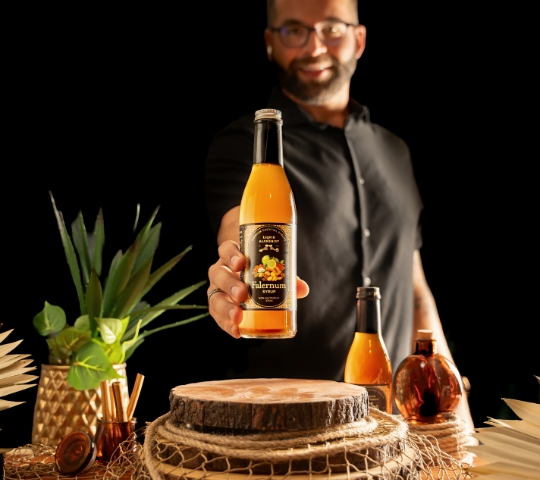
Liquid Alchemist Falernum bridges the gap between the drink’s bitter core and its tropical framework, adding the spiced complexity that keeps the Jungle Bird from reading as either a tiki drink or an aperitivo and instead lands as something entirely its own. Below is the full recipe, the flavor science behind the balance, and the variations worth building once you understand the original.
The Jungle Bird was created in 1973 by Jeffrey Ong at the Aviary Bar in the Kuala Lumpur Hilton—one of the first five-star hotels in Malaysia. It was developed as a welcome drink for arriving guests, which explains its structure: approachable enough for non-drinkers to enjoy, complex enough to be memorable. Unlike most tiki drinks born in California beach bars, the Jungle Bird emerged from Southeast Asian hospitality culture, which gives it a provenance genuinely distinct from the Trader Vic lineage.
The drink spent decades in relative obscurity until bartender Giuseppe Gonzalez reintroduced it to New York’s craft cocktail scene around 2010, publishing the recipe in Imbibe magazine. That revival coincided with a broader industry reassessment of bitter spirits, and the Jungle Bird became a touchstone for what some bartenders now call the aperitiki movement—tiki’s tropical structure fused with aperitivo bitterness. It was officially added to the IBA’s cocktail list, cementing its status as a modern classic.
The IBA specification and the modern craft standard differ slightly in proportions. The version below reflects the modern consensus, which dials back the Campari slightly from the original to improve accessibility without losing the drink’s defining bitterness.
Combine all ingredients in a shaker with ice. Shake and strain into a double rocks glass over fresh ice. Garnish with a pineapple wedge and a dehydrated lime wheel.
Element | IBA Spec | Modern Craft Version |
Rum | 45ml blackstrap | 1½ oz blackstrap or dark rum |
Campari | 20ml | ¾ oz (slightly reduced) |
Pineapple juice | 45ml | 1½ oz |
Lime juice | 15ml | ½ oz |
Sweetener | 15ml simple syrup | ½ oz falernum or demerara |
The most consequential difference is the sweetener. The IBA spec calls for simple syrup, which provides clean sweetness but nothing else. Falernum—built on clove, ginger, and almond—adds a spiced counterweight to Campari’s bitterness that simple syrup can’t replicate. It’s a small substitution with a disproportionate effect on the drink’s depth.
The conventional logic of tiki cocktails is additive: sweet syrups, tropical juices, and rum layers build toward richness. Campari operates on a different principle—its bitterness clears the palate rather than loading it, which is why aperitivos are traditionally served before meals. In the Jungle Bird, that clearing function prevents the pineapple and rum from becoming cloying.
Pineapple juice contains bromelain, a proteolytic enzyme that breaks down proteins and creates a distinctive textural softness. When paired with Campari’s gentian-derived bitterness, the result is a contrast that food pairing research identifies as a classic bitter-sweet bridge—each element making the other more perceptible rather than competing for dominance. The lime juice anchors both with acidity, preventing the bitterness from reading as harsh and the sweetness from reading as flat.
This is why adjusting the Campari ratio changes the drink’s entire character, not just its bitterness level. Reduce it too far and the pineapple dominates; increase it beyond the original spec and the rum disappears. The balance is load-bearing.
Most tiki recipes specify dark rum and leave it at that. The Jungle Bird’s original spec calls for blackstrap rum, which is a meaningful distinction. Blackstrap is distilled from blackstrap molasses—the third and most concentrated byproduct of sugar refining—producing a rum with intense, almost savory depth and bitterness of its own. That bitterness aligns with Campari rather than fighting it, which is why the substitution matters.
If blackstrap rum isn’t available, a split base works well: one part aged Jamaican rum for funk and one part demerara-style rum (El Dorado 8 or similar) for molasses richness. Avoid white or lightly aged rums—they lack the weight to hold their own against Campari and pineapple at these volumes. Spiced rum introduces competing flavors that muddy the drink’s structure rather than supporting it.
Campari’s bitterness is the most polarizing element in the recipe, and it’s also the most adjustable without breaking the drink’s architecture. For a more approachable version, reducing Campari to ½ oz and increasing falernum to ¾ oz softens the bitter edge while the spice notes maintain the drink’s complexity. Liquid Alchemist Ginger used at ¼ oz alongside falernum adds heat that reads as complexity rather than sweetness—a useful move for drinkers who find Campari flat but want more than a fruit-forward result.
For a more bitter-forward build closer to the original 1973 spec, increase Campari to 1 oz and reduce pineapple juice to 1 oz. This version is less tropical and more aperitivo-adjacent, which pairs well with food in a way the modern spec doesn’t. If you want to explore more cocktail builds and techniques across the bitterness spectrum, grab our free cocktail guide for recipes that go well beyond the standard playbook.
The Jungle Bird’s structure—bitter, tropical, acidic, spiced—is adaptable enough to support significant variation without losing its identity. The key is maintaining the bitter-sweet tension that defines the original.
Liquid Alchemist Passion Fruit at ¼ oz alongside the standard falernum measure adds a tart tropical layer that extends the pineapple acidity rather than sweetening it. Passion fruit’s aromatic intensity complements Campari’s herbal notes in a way that most fruit syrups don’t, making this the most coherent single-ingredient variation.
Replacing half the blackstrap rum with mezcal introduces smoky complexity that bridges tiki and craft cocktail territory. Reduce falernum to ¼ oz and add Liquid Alchemist Almond Orgeat at ¼ oz—the nuttiness softens the smoke without losing it. This version leans aperitiki rather than tiki, best served as an early-evening drink rather than a late-night build.
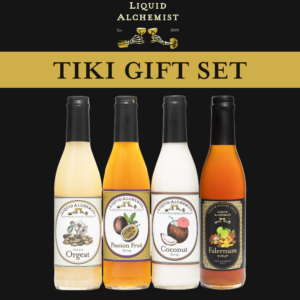
Combine and refrigerate up to 24 hours before serving. Pour over ice individually—do not pre-dilute. The Tiki Cocktail Syrup Gift Set, which includes Falernum, Almond Orgeat, and Passion Fruit, covers every variation above in one order. Use code TRYUS for 25% off plus free shipping on your first order.
The Jungle Bird is the only classic tiki cocktail built around a bitter aperitivo spirit. Most tiki drinks rely entirely on sweet syrups, fruit juices, and rum layering—Campari introduces a bitter-sweet tension that’s structurally closer to a Negroni than a Mai Tai, which is why the drink occupies a unique position at the intersection of tiki and the modern aperitivo movement.
Aperol works as a substitute but produces a noticeably different drink. Aperol is lower in alcohol (11% vs Campari’s 24%) and significantly less bitter, which shifts the balance toward sweetness and reduces the drink’s complexity. The result is more approachable for bitter-averse drinkers but loses the defining tension that makes the original distinctive. If using Aperol, reduce the pineapple juice slightly to compensate for the added sweetness.
Blackstrap rum is distilled from the most concentrated form of molasses, producing a darker, more bitter, and more intensely flavored spirit than standard dark rum. That inherent bitterness aligns with Campari’s bitter profile rather than contrasting with it, creating a more cohesive base. Using a lighter rum disrupts this alignment and makes the drink taste unbalanced—sweeter on entry and thinner on the finish.
The Jungle Bird was included in the International Bartenders Association’s updated cocktail list in 2020, recognizing its status as a modern classic. Its addition came roughly a decade after bartender Giuseppe Gonzalez reintroduced it to the craft cocktail world, a timeline that reflects how long it takes for a revived drink to move from bartender circles into institutional recognition.
It often converts tiki skeptics precisely because it doesn’t follow tiki conventions. Drinkers who find most tiki cocktails too sweet or too simple tend to respond well to the Jungle Bird’s bitterness and structural complexity. The Campari gives it a backbone that sweet-forward tropical drinks lack, which makes it more interesting to palates calibrated to craft cocktails, wine, or bitter spirits.
A double rocks glass is standard and functional—it accommodates the volume, holds ice well, and supports the garnish. A ceramic tiki mug works for a more theatrical presentation without affecting the drink. Avoid coupe or Nick & Nora glasses; the Jungle Bird’s ice-forward build and fruit garnish are calibrated for rocks-style service, and the drink’s balance shifts as it dilutes, which requires the ice to be present throughout.
Simple syrup adds sweetness without flavor, which neutralizes some of Campari’s bitterness but doesn’t add complexity. Falernum—built on clove, ginger, lime, and almond—provides sweetness and a spiced aromatic layer that engages Campari’s herbal notes rather than just offsetting them. The drink reads as more cohesive with falernum because the spice creates a connective thread between the bitter aperitivo and the tropical fruit elements.

Hurry—our Last Minute Stocking Stuffer Sale is your final chance to get 30% off and free shipping on orders over $35! Order by 12/14 to ensure delivery just in time for Christmas Eve. Don’t miss out on these festive favorites!
Get notified about new articles
Margarita Day Special
25% Off Prickly Pear, Blood Orange, Passion Fruit, Peach, Tamarindo, Strawberry, & Mango February 22 only
Kick off the new year with our Dry January Sale! From 12/27-1/15, enjoy 25% off on all featured flavors in our Dry & Damp Cocktail Guide, perfect for crafting delicious non-alcoholic and low-ABV drinks to help you start the year refreshed and on trend!
CODE: SMBIZ
CODE: BLKFRI