
Lavender Lemonade Mocktail – Sweetness with an Herbal Twist
Some drinks look beautiful. This one tastes exactly as beautiful as it looks. A lavender lemonade mocktail layers bright citrus acidity against soft floral sweetness, producing something that feels spa-sophisticated but takes under two minutes to build. There is no muddling, no steeping, no technique barrier. HipStirs Lavender Haze Cocktail Syrup delivers the lavender infusion already balanced — consistent every time, without the bitterness that comes from steeping raw flowers too long.
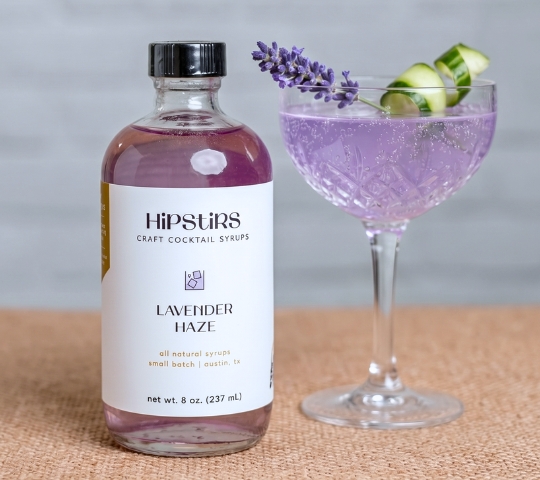
The flavor science behind why lavender and lemon work so well together is genuinely interesting, the build is simpler than most people expect, and what ends up in the glass does more than just taste good.
The Chemistry Behind Lavender's Flavor
Lavender is often described as simply “floral,” but that sells it short. Its flavor profile is driven primarily by two naturally occurring aromatic compounds: linalool and linalyl acetate. According to research published in the National Library of Medicine, these molecules are responsible for both lavender’s distinctive herbal aroma and its widely studied calming effects on the nervous system. That is why a lavender drink does not just taste relaxing — it actually is.
Linalool in particular carries a slightly citrus-adjacent quality alongside the floral notes, which explains why lavender never reads as purely sweet. There is an herbal brightness underneath. That nuance is what makes it compelling in a beverage rather than cloying, and it is precisely what a well-made lavender syrup needs to preserve.
Why Lavender and Lemon Are a Perfect Pair
The citrus-lavender combination is not just a trend — it is rooted in flavor chemistry. Research on lavender’s aromatic compounds shows it contains monoterpenoids and phenolic compounds that share aromatic properties with the terpenes found in citrus oils. Shared terpene families allow lemon’s sharp brightness to blend smoothly with lavender’s floral sweetness rather than compete with it.
In practical terms: lemon provides the acid backbone and clean finish. Lavender provides depth and aromatic lift. Together they occupy the entire flavor spectrum of a drink — bright on the front, floral in the middle, clean on the exit. This is why nearly every professional lavender beverage pairs with lemon rather than other fruits. It is not a creative choice. It is chemistry.
The Mocktail Itself: Two Ways to Build It
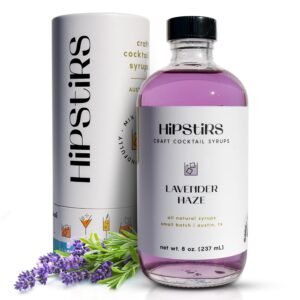
Both versions below use HipStirs Lavender Haze Syrup as the foundation. The syrup is crafted from natural ingredients with no artificial sweeteners, which matters here — synthetic lavender flavor tends to veer medicinal, a problem that disappears when you start with a quality infusion.
Classic Lavender Lemonade Mocktail (Still)
Ingredients:
- 1¼ oz Lavender Haze Syrup
- ½ oz fresh lemon juice
- 4 oz still water or lemonade base
- Ice
- Garnish: lemon wheel, fresh lavender sprig (optional)
Method: Combine the syrup and lemon juice in a rocks glass over ice. Add the water or lemonade, stir gently to integrate, and garnish. For a more intense floral note, let the syrup settle at the bottom before stirring — the first sip will be more lavender-forward, and the drink will even out as you go.
Sparkling Lavender Lemonade Mocktail
Ingredients:
- 1¼ oz Lavender Haze Syrup
- ½ oz fresh lemon juice
- 4 oz sparkling water or club soda
- Ice
- Garnish: lemon twist or edible flowers
Method: Build over ice in a tall glass. Add syrup and lemon juice first, then pour sparkling water slowly down the side of the glass to preserve carbonation. Stir once from the bottom. The bubbles add a textural contrast that makes the drink feel more festive and slightly less sweet.
If you want to explore more techniques and build out your mocktail repertoire, grab our free cocktail guide — it covers everything from flavor pairing to batch prep.
Why Lavender Syrup Outperforms Raw Lavender
Home bartenders who have tried to infuse raw lavender into a simple syrup know the frustration: timing is everything, and the margin between fragrant and medicinal is about 90 seconds. Lavender’s volatile aromatic compounds — the same linalool-forward molecules that create its appeal — also become bitter under prolonged heat. Over-steep, and the drink tastes like soap. Under-steep, and there is barely any flavor at all.
A purpose-built lavender syrup solves this. The infusion process is controlled to extract the volatile oils at peak aromatic intensity without activating the bitter undertones. The result is a consistent product you can measure precisely, which is exactly what reliable mocktail-making requires. Consistency matters more for mocktails than cocktails — without alcohol to mask imbalance, every millimeter of syrup shows up in the glass.
The Wellness Case for Botanical Mocktails
Lavender’s Functional Dimension
The non-alcoholic beverage market has grown significantly over the past several years, and the leading driver is not abstinence from alcohol — it is a consumer interest in functional drinks that offer something beyond hydration. Lavender sits at the intersection of flavor and function more naturally than most ingredients. As noted by the Cleveland Clinic, lavender has been studied for its potential to promote relaxation and support sleep quality, largely attributed to its linalool content.
What Lemon Brings to the Glass
The lemon component adds its own dimension. Fresh lemon juice contributes vitamin C and antioxidant compounds that support immune health while sharpening the overall flavor profile of the drink. A lavender lemonade mocktail is not a health product — but it is genuinely better for you than most things you could put in a glass, and it tastes intentional in a way that plain sparkling water never does.
Lavender’s Place in Modern Gastronomy
Lavender has also become a mainstream culinary ingredient. Romanian Journal of Applied Sciences research confirms its growing use in the food and beverage industry for both its distinctive aroma and its sensory appeal in modern gastronomy. Pairing it with a craft syrup brings that culinary sophistication into the home bar without any professional training required.
Scaling for a Crowd: Batch Lavender Lemonade
A lavender lemonade mocktail is also an excellent batch drink for brunches, showers, or any gathering where you want a beautiful, low-effort centerpiece. The ratios scale cleanly, and the drink holds well over ice for up to two hours without losing character.
Batch Recipe (serves 10):
- 12½ oz Lavender Haze Syrup
- 5 oz fresh lemon juice
- 40 oz sparkling or still water
- Sliced lemons and fresh lavender for garnish (optional)
Combine syrup and lemon juice in a large pitcher, then add water just before serving to preserve carbonation if using sparkling. Guests can adjust their own sweetness by adding a splash more lemon. If you are entertaining this season and want a one-stop kit for impressive non-alcoholic drinks, the HipStirs Holiday Cocktail Trio Pack — which includes Cranberry Pie, Pumpkin Spice, and Old Fashioned syrups — pairs well with a Lavender Haze addition for a complete mocktail station.
A Drink Worth Making Slowly
A lavender lemonade mocktail is one of those rare drinks that works for every occasion and every guest. It is visually striking, genuinely interesting to drink, and built on a flavor pairing that has real scientific grounding. The floral-citrus combination delivers complexity without requiring any advanced technique, and the wellness dimension gives it a relevance that purely novelty-driven mocktails lack.
The most impressive drinks at any gathering are the ones that taste like someone cared about the ingredients. Choose natural over artificial, balanced over sweet, and the rest takes care of itself.
Ready to build your lavender mocktail at home? Pick up HipStirs Lavender Haze Syrup and use code TRYUS for 25% off plus free shipping on your first order. Want even more recipes to round out your home bar? Grab our free guide for techniques and inspiration.
FAQs
What is a lavender lemonade mocktail?
A lavender lemonade mocktail is a non-alcoholic drink made with lavender syrup, fresh lemon juice, and still or sparkling water. It delivers the same floral-citrus complexity as a cocktail version without any spirit, making it suitable for any guest at any occasion.
Why does lavender pair so well with lemon?
Lavender and lemon share aromatic terpene compounds, which allows their flavor profiles to blend smoothly rather than clash. Research on lavender’s composition confirms it contains monoterpenoids that overlap chemically with the volatile oils in citrus, creating a naturally complementary pairing.
Can I use dried lavender instead of lavender syrup?
You can steep dried lavender into a homemade simple syrup, but the timing window is narrow — lavender’s volatile aromatic compounds turn bitter quickly under heat. A quality premade lavender syrup eliminates that variable entirely and produces more consistent results.
Does lavender have any health benefits in drinks?
Lavender contains linalool, a compound studied for its potential calming and relaxation effects. While a single drink is not a wellness supplement, the botanical properties of lavender are genuine and have been documented in peer-reviewed research, including studies cited by the National Library of Medicine.
How do I keep a batched lavender lemonade from getting too sweet?
Balance is the key. Use a 1:3 ratio of syrup to liquid and add the full measure of lemon juice — the acidity counteracts sweetness effectively. For a crowd, set out lemon wedges so guests can adjust their own glass if needed.
Can I make a sparkling version ahead of time?
Combine the syrup and lemon juice up to 24 hours in advance and refrigerate, but add the sparkling water only immediately before serving. Pre-carbonated batches lose their fizz within 30–45 minutes, especially once poured over ice.
What makes HipStirs Lavender Haze different from other lavender syrups?
HipStirs Lavender Haze is made from natural ingredients without artificial sweeteners or artificial flavoring, and it is crafted in small batches in the USA. The infusion is designed to capture lavender’s aromatic peak without the medicinal bitterness that results from over-extraction — giving you a consistent, professional-quality flavor every time.