
Hurry—our Last Minute Stocking Stuffer Sale is your final chance to get 30% off and free shipping on orders over $35! Order by 12/14 to ensure delivery just in time for Christmas Eve. Don’t miss out on these festive favorites!

There’s a reason the Passion Fruit Martini has held its place on cocktail menus for over two decades. It’s tropical without being frivolous, sweet without being cloying, and impressive enough to serve at a dinner party without requiring professional training. Liquid Alchemist Passion Fruit syrup makes the whole thing achievable at home—real ingredients, no artificial shortcuts, just a genuinely great cocktail.
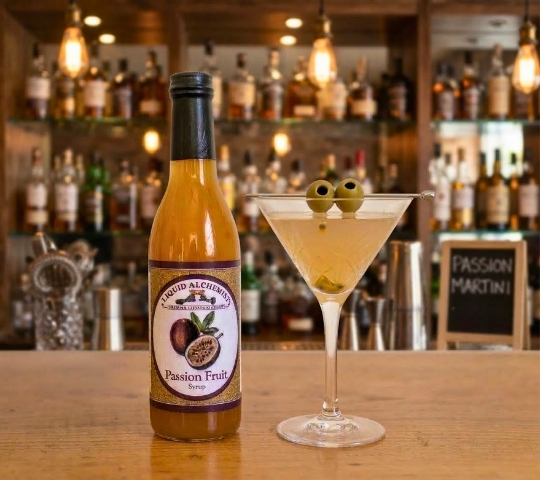
What follows covers the full picture: history, technique, ingredient choices, and a mocktail version for non-drinkers who deserve something equally special.
The Passion Fruit Martini was created in the early 2000s by Douglas Ankrah at London’s Townhouse bar. He named it the Pornstar Martini—a name meant to evoke glamour and indulgence rather than anything explicit—and it quickly became one of the most ordered cocktails in the UK.
The name caused enough controversy that many bars and menus eventually rebranded it as the Passion Fruit Martini, which is how it’s most commonly known outside Britain today. The prosecco served on the side, a signature of the original recipe, was Ankrah’s way of giving drinkers a palate cleanser between sips—a detail that’s still worth honoring.
Before building the drink, it helps to understand why it works. Passion fruit is naturally high in acidity and floral aromatics—bright and punchy on its own, but unbalanced without sweetness to temper it.
Vanilla rounds out that acidity with warmth and depth. The prosecco provides effervescence and a dry counterpoint to the sweetness of the cocktail. Every component has a role, which is why substitutions require a little thought rather than a straight swap.
The most common reason a homemade Passion Fruit Martini tastes “off” is an imbalance between sweetness and acidity. Too much passion fruit without enough syrup produces a sharp, sour drink. Too much sweetener and the tropical brightness disappears.
Liquid Alchemist Passion Fruit syrup is formulated with real cane sugar and natural passion fruit to hit that balance precisely—removing the guesswork that comes with fresh fruit or commercial concentrates.
The ingredient decisions you make before shaking determine everything. Here’s how each choice affects the final drink.
Vanilla vodka is the traditional choice and for good reason—it contributes warmth and sweetness that bridges the gap between the spirit and the passion fruit without adding a separate ingredient. The vanilla note softens the natural tartness of passion fruit and adds a subtle creaminess that makes the cocktail feel more rounded and complete.
A good quality neutral vodka works too, especially when using a premium passion fruit syrup that already carries enough sweetness and depth. If you go the plain vodka route, a small measure of vanilla simple syrup can replicate that warmth. Gin is an underexplored alternative for drinkers who want botanical complexity—choose a lighter London Dry style rather than a heavily juniper-forward option.
Fresh passion fruit delivers the brightest flavor but requires extra prep and produces inconsistent results depending on ripeness. An underripe fruit can throw the entire drink off balance, adding harshness where there should be floral sweetness. Frozen puree is the professional’s choice—more consistent, easier to measure, and available year-round.
A premium passion fruit syrup like Liquid Alchemist’s offers the easiest, most consistent result at home: no straining seeds, no adjusting for sweetness, no waste. It’s formulated to deliver the right balance of tropical brightness and natural sweetness in every pour.
The prosecco is served in a small glass alongside the martini—not poured in. Some drinkers sip it between drinks; others pour it in once they’ve had a few sips and want the fizz. Brut prosecco works better than sweeter styles because it doesn’t compete with the cocktail’s own sweetness—it cuts through it cleanly and refreshes the palate.
If you don’t have prosecco on hand, a dry sparkling wine or quality sparkling water works as a substitute without sacrificing the ritual. The side serve is part of the experience, so don’t skip it entirely.
Shaking for a full 12–15 seconds does two things: it chills and dilutes the cocktail to the right balance, and it aerates the mixture to create the signature frothy top. Under-shaking produces a flat, underwhelming drink.
Double straining is non-negotiable if you want a clean, bar-quality result. A hawthorne strainer followed by a fine mesh strainer removes tiny ice chips that would dilute the drink unevenly as they melt. It’s a 10-second step that makes a visible difference in the glass.
A coupe glass is the preferred choice in modern cocktail culture. Its rounded bowl concentrates aroma, keeps the drink colder longer, and is more stable than the classic V-shaped martini glass. Either works—but the coupe has largely replaced the traditional option in craft cocktail settings for good reason.
Chill your glass before pouring. Fill it with ice water while you prep and shake, then discard before straining in. A cold glass keeps the cocktail at its best from first sip to last.
Scaling a Passion Fruit Martini for a group is straightforward—the key is making the base ahead of time and shaking to order, or using a large shaker for batches of two to three servings at once.
For a batch of 6 servings, combine 12 oz vanilla vodka, 6 oz Liquid Alchemist Passion Fruit syrup, 3 oz fresh lime juice, and 3 oz pineapple juice in a pitcher. Refrigerate until ready to serve. Shake individual portions over ice when guests arrive to preserve the froth and temperature. The base keeps refrigerated for up to 48 hours without losing quality.
If you want more techniques for batch cocktail preparation and crowd-pleasing home bar setups, grab our free cocktail guide—it covers everything from scaling recipes to stocking a home bar for entertaining.
The non-alcoholic version of this drink is genuinely impressive—not a compromise. The tropical character of the passion fruit and the prosecco ritual translate perfectly without spirits.
Shake all ingredients hard over ice, double strain into a chilled coupe, and serve with sparkling water on the side. The result has the same frothy top, the same tropical brightness, and the same elegance as the original.
The Passion Fruit Martini is one of those cocktails that looks effortlessly impressive and tastes even better than it looks. With the right syrup, the right technique, and a properly chilled coupe, it’s indistinguishable from a bar-made version.
Start with Liquid Alchemist Passion Fruit syrup and use code TRYUS for 25% off plus free shipping on your first order. It’s the one ingredient that makes every version of this cocktail—classic, batched, or alcohol-free—worth making again and again.
That was the original name given by creator Douglas Ankrah when he invented the drink in London in the early 2000s. The name was meant to evoke glamour and indulgence. Many bars and menus later rebranded it as the Passion Fruit Martini, which is how it’s most widely known outside the UK today.
Yes. The prosecco is a traditional side serve, not a core component of the cocktail itself. A dry sparkling wine or even quality sparkling water works as a substitute and preserves the ritual without requiring a full bottle of prosecco.
A premium passion fruit syrup like Liquid Alchemist’s is a direct substitute that also removes the need for a separate sweetener. It delivers consistent flavor and balance without the additional alcohol content of a liqueur.
Shake hard for a full 12–15 seconds with plenty of ice. The vigorous agitation aerates the pineapple juice naturally, creating the foam without any additional ingredients.
A lighter London Dry gin works well and adds botanical complexity that pairs interestingly with the tropical passion fruit. Avoid heavily juniper-forward gins, which can overpower the fruit character.
The base mixture—vodka, syrup, lime juice, and pineapple juice—keeps refrigerated for up to 48 hours. Shake individual or small-batch portions over fresh ice just before serving to preserve the froth and chill.
It can. Using a smaller measure of syrup (reduce by ¼ oz) and balancing with a touch more lime keeps the tropical character while bringing the overall sweetness down. A premium natural syrup gives you more control than commercial mixes, which are harder to scale back without affecting flavor.

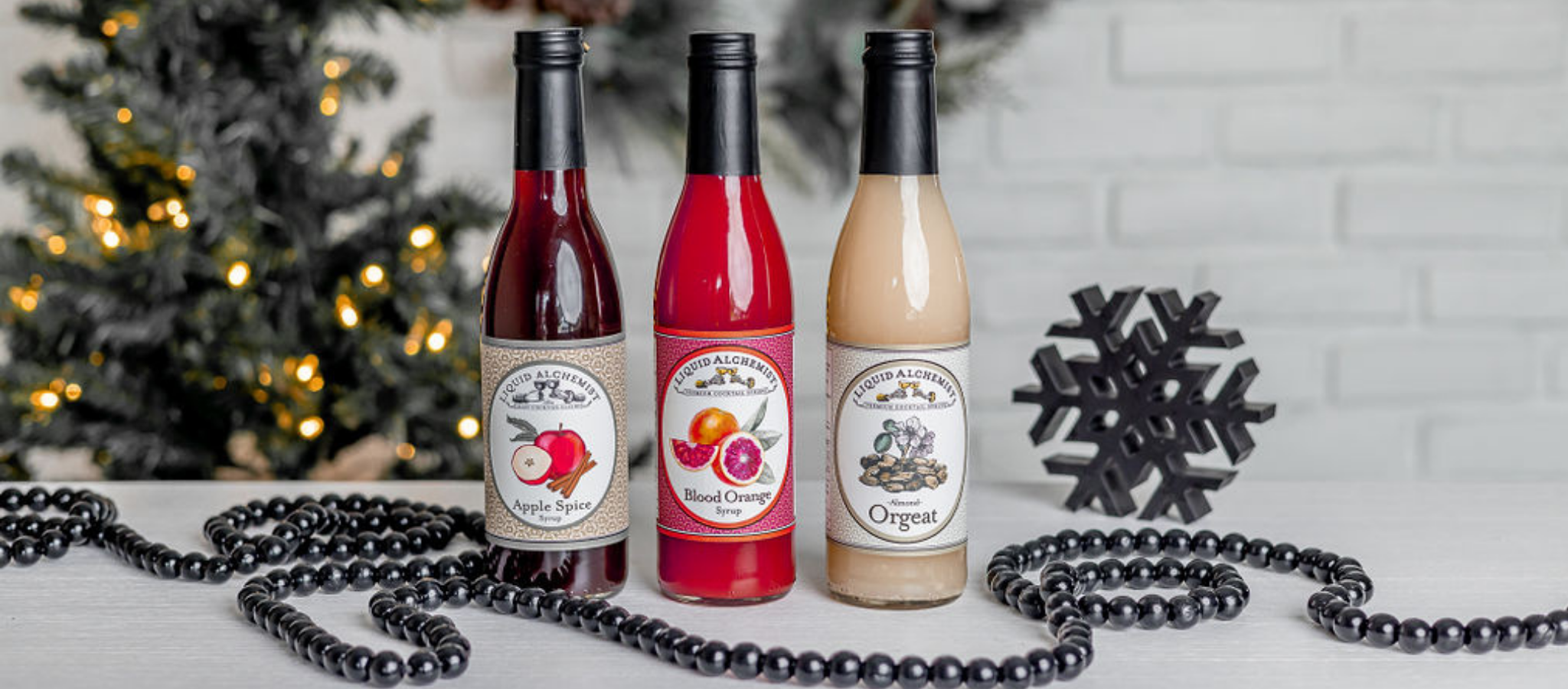
Hurry—our Last Minute Stocking Stuffer Sale is your final chance to get 30% off and free shipping on orders over $35! Order by 12/14 to ensure delivery just in time for Christmas Eve. Don’t miss out on these festive favorites!
Get notified about new articles

Margarita Day Special
25% Off Prickly Pear, Blood Orange, Passion Fruit, Peach, Tamarindo, Strawberry, & Mango February 22 only
Kick off the new year with our Dry January Sale! From 12/27-1/15, enjoy 25% off on all featured flavors in our Dry & Damp Cocktail Guide, perfect for crafting delicious non-alcoholic and low-ABV drinks to help you start the year refreshed and on trend!
CODE: SMBIZ
CODE: BLKFRI