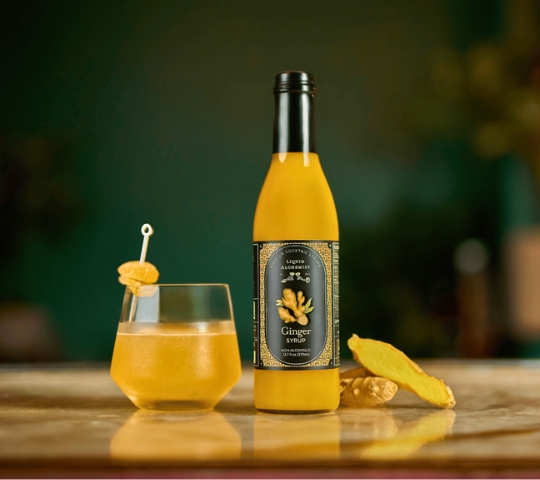

El Diablo Cocktail Recipe: Tequila, Cassis, and Spice
El Diablo is one of the few tequila cocktails that puts the spirit in genuine conversation with berry depth and ginger heat — three distinct flavor profiles that should clash but don’t. The balance works because each element occupies a different part of the palate, and nothing overlaps. Liquid Alchemist Ginger Cocktail Syrup replaces bottled ginger beer as the spice component, giving you precise control over heat level and sweetness in a way that pre-made carbonated versions never allow.
A drink this specific deserves to be understood, not just followed.
Where El Diablo Comes From
The El Diablo first appeared in print in 1946 in Trader Vic’s Book of Food and Drink, where it was introduced as the “Mexican El Diablo” — a deliberate nod to the tequila base at a time when the spirit was still considered exotic outside of Mexico. As VinePair’s history of the cocktail documents, the drink gained traction through Trader Vic’s tiki-era menus, where bold fruit combinations and Latin ingredients were a defining creative pattern.
The name — The Devil — earned its place. The combination of tequila’s herbal sharpness, cassis’s dark berry intensity, and ginger’s heat produces a drink that is genuinely assertive from start to finish. It fell out of mainstream rotation for decades before a craft cocktail revival brought it back as one of the more compelling overlooked classics in the tiki canon.
What Each Ingredient Actually Does
Tequila: The Herbal Backbone
Tequila’s flavor profile includes herbal, citrus, and peppery compounds derived from agave fermentation and distillation — a character set that is unusually compatible with both fruit and spice. Unlike most spirits, tequila does not disappear behind assertive ingredients; it maintains its identity throughout the drink. That persistence is what makes El Diablo work: the agave note is still detectable at the finish even after cassis and ginger have done their work on the mid-palate.
-
Ginger Cocktail Syrup
$15.99 – $28.99Price range: $15.99 through $28.99 Shop Now This product has multiple variants. The options may be chosen on the product page
Blanco tequila is the standard choice for El Diablo. Its unaged profile is crisper and more citrus-forward than reposado, which means it cuts through the cassis sweetness rather than adding another layer of softness. If you prefer a rounder, slightly warmer version, a reposado works — but it shifts the drink’s balance toward richness over brightness.
Crème de Cassis: Dark Berry Depth
Crème de cassis is a French liqueur made from blackcurrants — one of the most aromatically intense berries in culinary use. NIH research on blackcurrant volatile compounds identifies dozens of volatile aroma molecules that contribute to the berry’s powerful, concentrated flavor profile, explaining why a relatively small measure of cassis can define an entire cocktail’s character. The deep ruby color it adds is a visual signal of exactly how much flavor it carries.
Blackcurrants are also rich in anthocyanins — the plant pigments responsible for their near-black color and astringent depth. That slight astringency is what prevents cassis from reading as purely sweet in a cocktail; it has a grip that interacts with tequila’s agave bitterness and creates a more complex finish than a simple fruit liqueur would produce.
Ginger Syrup: Precision Spice
Bottled ginger beer gives you spice and carbonation together, but no control over either. Liquid Alchemist Ginger Cocktail Syrup separates them — you add ginger’s heat exactly where you want it in the recipe, then top with sparkling water to your preferred level of carbonation. The result is a more calibrated drink, and one that tastes more intentionally built than a standard ginger beer version.
Ginger’s spice compound, gingerol, creates a clean, sharp heat that is distinct from chili heat — it sits at the back of the throat rather than on the tongue, which means it does not compete with the cassis’s front-palate sweetness. That spatial separation is part of why ginger and berry work so well together in a single drink.
Premium vs. Commercial: Side by Side
Liquid Alchemist | Commercial Alternatives | |
Ginger base | Real ginger, natural spice compounds | Artificial ginger flavor, high-fructose corn syrup |
Spice control | Adjustable — add more or less to taste | Fixed by ginger beer carbonation level |
Sweetness | Real cane sugar, clean finish | Often oversweetened, synthetic aftertaste |
Carbonation | Separate — use any sparkling water | Combined with ginger flavor, no flexibility |
Shelf life (opened) | Up to two months refrigerated | Single-use cans, no batch flexibility |
Grenadine alternative | Grenadine Syrup made with real pomegranate | Artificial coloring, corn syrup base |
The practical difference shows most clearly when you batch the drink. Syrup-based ginger gives you a consistent, scalable recipe — ginger beer does not batch at all without going flat.
The Recipe
Ingredients
- 2 oz blanco tequila
- ½ oz crème de cassis
- ¾ oz fresh lime juice
- ½ oz Liquid Alchemist Ginger Cocktail Syrup
- 2 oz sparkling water
- Ice
- Garnish: lime wheel, candied ginger (optional)
Method
Combine tequila, cassis, lime juice, and ginger syrup in a shaker with ice. Shake for 10–12 seconds. Strain into a highball glass over fresh ice. Top with sparkling water poured slowly down the side of the glass. Garnish and serve immediately. The layered pour keeps the carbonation intact longer and produces a more visually striking gradient from the cassis settling at the base.
For a spicier variation, add a barspoon of Liquid Alchemist Spicy Habanero Syrup to the shaker — it deepens the heat profile from ginger’s throat warmth into something genuinely devilish.
Balancing the Three Flavor Axes
El Diablo operates on three simultaneous axes: sweet-tart from the cassis and lime, herbal-sharp from the tequila, and spicy-warm from the ginger. Getting the balance right means no single axis dominates. The most common error is over-pouring cassis, which pushes the drink into berry cordial territory and buries the tequila.
Start with the ratios above and taste before adding sparkling water. The pre-water mixture should taste sharp and slightly intense — the dilution from ice and the top of sparkling water will soften everything by the time it reaches the glass. If it already tastes balanced in the shaker, it will be bland in the finished drink. If you want to explore more tequila-forward recipes and understand how to calibrate citrus, spice, and sweetener ratios, grab our free cocktail guide.
A Cocktail That Earns Its Name
El Diablo is not a subtle drink. Every ingredient announces itself, and the combination is more confrontational than most cocktail menus prepare you for. That directness is exactly the point — it is a drink built on contrast rather than harmony, where tension between tequila, berry, and ginger creates something more interesting than any one of them could produce alone.
The craft version, built on natural syrups and fresh juice, makes that tension precise rather than accidental.
Pick up Liquid Alchemist Ginger Cocktail Syrup and use code TRYUS for 25% off plus free shipping on your first order. If you want to build out your full tequila cocktail toolkit, the Margarita 3-Pack covers the three essential flavors for any tequila-forward home bar. For more recipes and technique, grab our free guide.
FAQs
What is an El Diablo cocktail?
El Diablo is a tequila cocktail first published in Trader Vic’s 1946 Book of Food and Drink. It combines blanco tequila, crème de cassis, fresh lime juice, and ginger beer — or ginger syrup and sparkling water — into a drink that balances herbal agave character with dark berry sweetness and sharp spice.
What does crème de cassis taste like?
Crème de cassis is intensely berry-forward with a deep, slightly astringent quality from the blackcurrant’s natural anthocyanin compounds. It is sweeter than the raw fruit but retains a grip that prevents it from reading as one-dimensional in cocktails — closer to a concentrated dark fruit liqueur than a simple sweetener.
Can I use ginger syrup instead of ginger beer in El Diablo?
Yes, and the result is more precise. Ginger syrup lets you control spice level and sweetness independently, then add sparkling water to your preferred carbonation level. Bottled ginger beer fixes both variables together, which limits your ability to calibrate the final drink.
What tequila works best in El Diablo?
Blanco tequila is the standard choice — its unaged, citrus-forward profile cuts through the cassis sweetness and maintains its agave character at the finish. A reposado works if you prefer a softer, slightly warmer version, but it shifts the balance toward richness over brightness.
How do I make El Diablo less sweet?
Reduce the cassis to ¼ oz and increase the lime juice slightly. Cassis is the primary source of sweetness in the drink, so dialing it back is the most effective lever. Using a ginger syrup instead of ginger beer also helps, since most commercial ginger beers add significant sugar alongside the spice.
Is there a non-alcoholic version of El Diablo?
A credible non-alcoholic version uses a blanco-style non-alcoholic spirit or strong hibiscus tea as the base, blackcurrant cordial in place of cassis, and fresh lime with ginger syrup and sparkling water. The flavor architecture is similar even without the agave character — herbal-tart, berry-sweet, ginger-spiced.
What makes El Diablo different from a Tequila Mule?
The cassis is the defining difference. A Tequila Mule is tequila, lime, and ginger beer — clean and refreshing but linear. El Diablo adds crème de cassis, which introduces dark berry depth and color that transforms the drink’s flavor profile from a simple highball into something with genuine complexity.