
Hurry—our Last Minute Stocking Stuffer Sale is your final chance to get 30% off and free shipping on orders over $35! Order by 12/14 to ensure delivery just in time for Christmas Eve. Don’t miss out on these festive favorites!

The Rum Runner wasn’t designed. It was improvised—built from a storeroom full of bottles that needed to be emptied before a new shipment arrived. That origin story explains everything about why the drink has so many ingredients, why no two versions are identical, and why it has somehow become one of the most beloved cocktails in Florida despite having no canonical recipe.
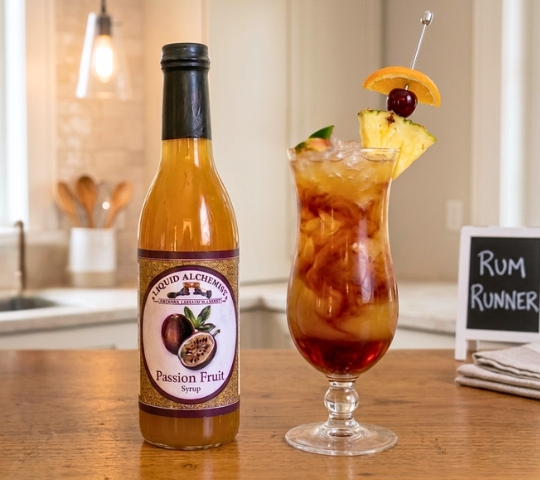
Liquid Alchemist Passion Fruit replaces the artificial sweeteners and excess juice volume that turn most resort versions into sugar traps—its tart tropical acidity does the structural work that keeps the rum visible beneath the fruit layers. Below is the full history, the original recipe, and the system for building every version from the 1972 original to a modern craft adaptation.
The Florida Keys have a specific relationship with the word “rum runner.” During Prohibition (1920–1933), the Bahamas sat just 130 miles from Miami, and the Keys became one of the most active corridors for illegal alcohol smuggling into the United States. As History.com documents, bootlegging operations flourished across the country as federal enforcement consistently failed to stem the flow of alcohol—and the Florida Keys, with their labyrinthine waterways and proximity to Caribbean supply, were particularly difficult to police.
The smugglers who ran rum through those channels became romanticized figures—part pirate, part folk hero—in Keys culture. Decades later, when a bartender at a beach bar in Islamorada needed a name for his improvised drink, the local legend of the rum runner was the obvious choice.
In 1972, the owner of Holiday Isle resort in Islamorada challenged his bar manager, John “Tiki John” Ebert, to create a cocktail using a stockroom full of overstock liquor before a new shipment arrived. As documented by Fifty Grande, Tiki John mixed Myers rum, banana liqueur, brandy, and grenadine—and the Rum Runner was born.
The drink was an immediate hit with the bar’s growing celebrity clientele. Three Waters Resort & Marina, which now operates on the former Holiday Isle property, confirms 1972 as the official creation date and still serves the cocktail at the original Tiki Bar. From Islamorada, the recipe spread down the Keys and eventually across Florida, picking up variations at every bar it passed through.
The chaotic ingredient list isn’t a design choice—it’s a historical artifact. The original recipe was built from whatever happened to be in the storeroom that day. Different bartenders who encountered the drink added their own overstock, which is why recipes from the 1970s and 1980s vary so dramatically. The structure isn’t arbitrary; it’s accumulated.
The version below reflects the most widely documented original formula, balancing both rums against the fruit liqueurs and replacing grenadine with Liquid Alchemist Passion Fruit for structural tartness rather than added sweetness.
Shake all ingredients except the grenadine and overproof float with ice. Strain into a tall glass over fresh ice. Float grenadine over the back of a spoon for the sunset layer. Float overproof rum on top if using. Garnish with orange slice, pineapple wedge, and cherry.
Element | Original 1972 | Modern Resort Version |
Rum base | Dark rum + brandy | Light + dark + coconut rum |
Sweetener | Grenadine only | Grenadine + banana liqueur heavy |
Citrus | Lime juice | Orange + pineapple juice |
Structure | Spirit-forward | Juice-forward |
Finish | Dry, complex | Sweet, one-dimensional |
Overproof float | Yes (traditional) | Rarely used |
The Rum Runner uses a flavor-stacking approach that most tropical cocktails avoid: multiple liqueurs at small measures, each contributing a different aromatic register. As analyzed by Got Rum Magazine, the combination of a low-congener overproof rum with high-congener dark rum creates a base with both alcoholic lift and aromatic depth—a split that mirrors the split-rum logic of classic tiki builds.
Banana liqueur contributes tropical body and sweetness that reads as richness rather than sugar—it sits in the mid-palate and extends the rum’s warmth. Blackberry brandy adds dark fruit contrast that prevents the drink from tasting uniformly bright and sweet. Without the blackberry element, the drink collapses into a rum-and-juice punch rather than a layered tropical cocktail.
Liquid Alchemist Passion Fruit at ½ oz replaces or supplements the orange juice, contributing the same citrus brightness with more aromatic complexity and less sugar volume. Passion fruit’s tartness sits higher in the flavor register than orange, which means it sharpens rather than sweetens—keeping the rum base audible underneath the fruit layers rather than burying it.
Most resort versions of the Rum Runner arrive frozen—blended with ice into a slushy consistency that softens every edge of the drink. The original was shaken and served over ice, which preserves the drink’s structural separation: spirit warmth on entry, fruit in the mid-palate, dark fruit and rum on the finish.
The frozen version isn’t wrong—it’s simply a different drinking experience optimized for heat and ease rather than flavor complexity. A shaken Rum Runner at the correct ratios is a more demanding but significantly more rewarding drink than its blended counterpart. If you want to explore more rum-forward builds and tropical technique, grab our free cocktail guide for recipes that go beyond the beach bar standard.
The Rum Runner’s lack of a canonical recipe is an advantage once you understand its architecture: split rum base, banana body, dark fruit contrast, citrus acid, and a controlled sweetener. Every variable can be adjusted without breaking the drink.
Liquid Alchemist Coconut at ¼ oz replaces coconut rum in builds that call for it—delivering coconut flavor without the proof reduction and added sweetness of coconut-flavored rum. Liquid Alchemist Mango at ¼ oz alongside banana liqueur adds a second tropical fruit layer that reads as depth rather than sweetness, following the same flavor-stacking logic that made the original recipe work. For a batched version serving 8, multiply all measures by eight, combine without ice, and refrigerate up to 24 hours—adding grenadine per glass at service to preserve the visual effect.
The Rum Runner exists because someone needed to empty a storeroom. It became one of Florida’s most iconic cocktails because the improvisation happened to produce a drink with genuine structural logic beneath its fruit-heavy surface. That’s the version worth building—not the resort approximation that replaced the craft with convenience.
Liquid Alchemist Passion Fruit is the syrup that keeps the rum audible in a drink that’s always at risk of drowning it. The Tiki Cocktail Syrup Gift Set adds Falernum, Almond Orgeat, and Passion Fruit for the full range of tiki-adjacent builds. Use code TRYUS for 25% off plus free shipping on your first order.
Yes. The Florida Keys were a primary corridor for rum smuggling during Prohibition, with the Bahamas sitting just 130 miles from Miami. The Keys’ bartenders and residents had a deep cultural connection to that history, and when Tiki John created the drink in 1972, naming it after the rum runners who had made the Keys famous decades earlier was a natural tribute to local legend.
The 1972 original was spirit-forward—dark rum and brandy as the base, with modest amounts of banana liqueur, grenadine, and citrus. Modern resort versions typically use three rums including coconut rum, increase the juice volume significantly, and reduce or eliminate the overproof float. The result is sweeter, lower in alcohol-forward character, and easier to drink in high heat—but structurally simpler than the original.
The split base is what gives the Rum Runner its layered character. Light rum contributes alcoholic lift and clean tropical brightness; dark rum provides molasses depth and aromatic warmth. Using a single rum produces a technically correct but dimensionally flat result. If only one rum is available, aged Jamaican rum is the better choice—its ester profile provides more complexity than light rum and carries the fruit liqueurs more effectively.
Banana liqueur performs a specific structural role: it provides tropical body and a mid-palate sweetness that acts as a bridge between the rum’s spirit character and the citrus acidity. Without it, the drink reads as a rum sour with fruit juice rather than a layered tropical cocktail. The banana flavor itself is secondary—what matters is the viscosity and mid-register sweetness it contributes to the drink’s architecture.
A shaken version over crushed ice achieves a texture closer to the frozen result without a blender. Shake vigorously with crushed ice and pour unstrained into a tall glass—the fine ice shards integrate into the drink and create a partially slushy texture that approximates the frozen experience while preserving more of the flavor complexity. The result is closer to the original recipe than a full blender version.
Both are multi-rum tropical cocktails built from Caribbean bar culture, but they differ structurally. The Bahama Mama has a cleaner architecture—rum, coconut, citrus, and one sweetener choice (coffee liqueur or grenadine)—and a more defined flavor direction. The Rum Runner is more chaotic, with banana liqueur and blackberry brandy adding dark fruit complexity that the Bahama Mama doesn’t attempt. The Rum Runner rewards careful ratio work; the Bahama Mama is more forgiving to improvisation.
A zero-proof build replaces the rum base with cold-brewed black tea for body and tannin, and a small amount of tamarind for the rum-adjacent funkiness. Replace banana liqueur with a small measure of mango or passion fruit syrup and use blackberry juice in place of blackberry brandy. Keep the pineapple juice, orange juice, and grenadine in their original ratios. The result loses the spirit warmth but preserves the drink’s layered fruit character.

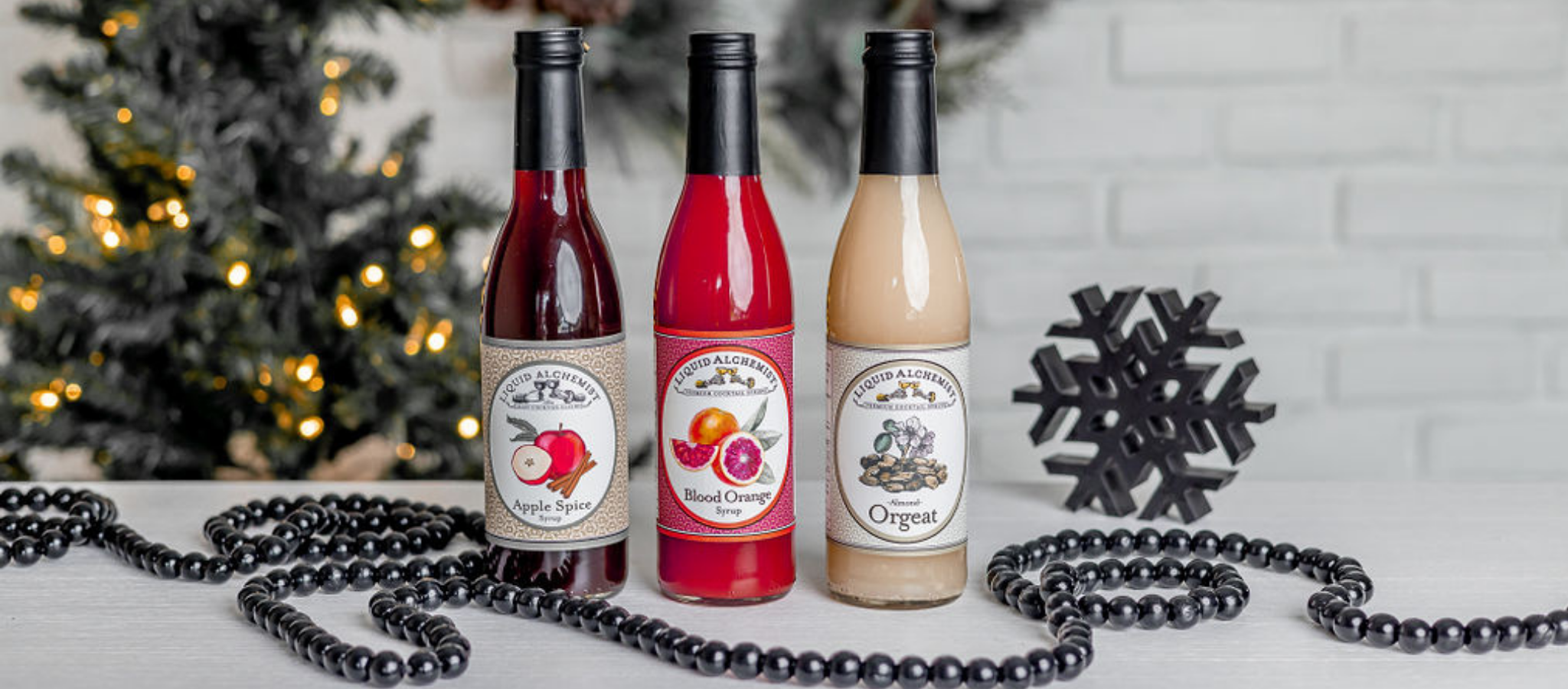
Hurry—our Last Minute Stocking Stuffer Sale is your final chance to get 30% off and free shipping on orders over $35! Order by 12/14 to ensure delivery just in time for Christmas Eve. Don’t miss out on these festive favorites!
Get notified about new articles
Margarita Day Special
25% Off Prickly Pear, Blood Orange, Passion Fruit, Peach, Tamarindo, Strawberry, & Mango February 22 only
Kick off the new year with our Dry January Sale! From 12/27-1/15, enjoy 25% off on all featured flavors in our Dry & Damp Cocktail Guide, perfect for crafting delicious non-alcoholic and low-ABV drinks to help you start the year refreshed and on trend!
CODE: SMBIZ
CODE: BLKFRI