
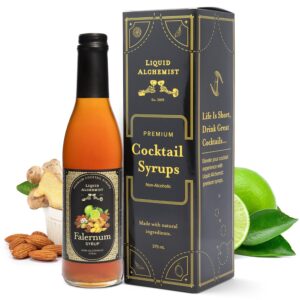
Hurry—our Last Minute Stocking Stuffer Sale is your final chance to get 30% off and free shipping on orders over $35! Order by 12/14 to ensure delivery just in time for Christmas Eve. Don’t miss out on these festive favorites!

Most cocktail names are arbitrary. Three Dots and a Dash is not. The name is Morse code for the letter V—and V meant one thing in 1945: Victory. The man who created it had just returned from serving in the United States Army Air Forces, and he encoded his celebration directly into the drink’s identity, its name, and its garnish.
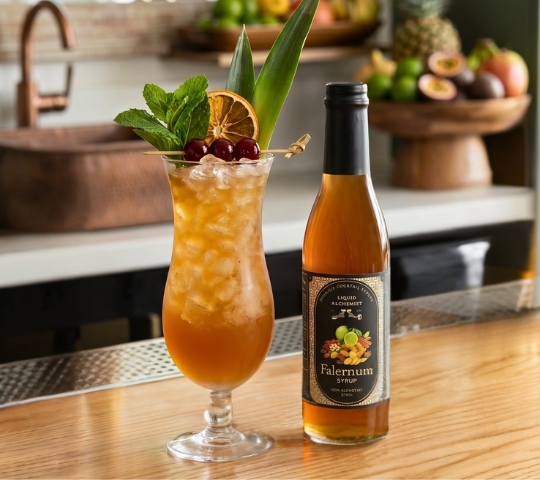
Liquid Alchemist Falernum is the syrup that defines this drink’s spiced backbone—clove, ginger, and almond layered against aged rum and citrus in a build that Donn Beach spent years perfecting in secret. Below is the full history, the flavor science behind tiki’s most complex sweetener system, and how to build every version from the original to a modern home bar adaptation.
Ernest Raymond Beaumont Gantt—known professionally as Donn Beach—opened Don the Beachcomber in Hollywood in 1933, inventing the tiki bar and much of the aesthetic culture that surrounded it. When WWII broke out, he enlisted and served as a Lieutenant Colonel in the USAAF from 1942 to 1945.
As documented by Vintage American Cocktails, Donn created the Three Dots and a Dash after returning from service, encoding “V for Victory” into the drink’s very name. The National WWII Museum documents how the V campaign had spread across occupied Europe via BBC radio—people tapped it on doors, blew it on car horns, knocked it as a waiter signal: three short beats, one long. Donn turned that same signal into a cocktail, with three maraschino cherries and a pineapple wedge as the garnish—three dots and a dash, made edible.
Donn Beach was famously secretive. He mixed his syrups in the kitchen before the bar opened, labeled them with meaningless codes, and never published a recipe. As documented by Imbibe Magazine, the Three Dots and a Dash was nearly lost entirely—it was tiki historian Jeff “Beachbum” Berry who unearthed it from the personal notebook of an old Beachcomber bartender and published it in his 2007 book Sippin’ Safari.
The version below follows the Berry/Smuggler’s Cove reconstruction, the most authoritative modern approximation of Donn’s original formula.
Add all ingredients to a shaker with crushed ice. Flash blend or shake vigorously. Pour unstrained into a tiki mug or footed pilsner glass. Garnish with three maraschino cherries on a pick (the dots) and a pineapple wedge (the dash).
The three cherries and pineapple wedge aren’t stylistic flourishes—they spell out the drink’s name in Morse code. Three dots, one dash. It’s one of the only cocktails in history where the garnish is also the title, which is why eliminating it changes the drink’s identity, not just its presentation.
Most cocktails use one sweetener. Three Dots and a Dash uses three—and each performs a structurally distinct function that the others can’t replicate.
Honey syrup provides body and a smooth floral sweetness that reads as richness rather than sugar. It’s the drink’s textural foundation, rounding the rum’s spirit heat without introducing competing aromatics. Allspice dram contributes depth—its eugenol-dominant flavor profile, documented in PMC research on Pimenta dioica, bridges clove, cinnamon, and nutmeg in a single ingredient, producing the layered aromatic complexity that defines classic tiki flavor.
Liquid Alchemist Falernum occupies the third sweetener position—spiced citrus and almond that connects the allspice dram’s depth to the lime juice’s brightness. Research on flavor pairing networks confirms that almond compounds share aromatic bridges with both rum esters and citrus terpenes, which is why falernum functions as a connective tissue rather than a competing flavor. Remove any one of the three sweeteners and the drink doesn’t just taste different—it loses structural coherence.
Sweetener | Primary Role | What It Contributes |
Honey syrup | Texture + body | Floral richness, rounds spirit heat |
Allspice dram | Depth + warmth | Clove/cinnamon/nutmeg complexity |
Falernum | Spice bridge | Connects citrus to rum and allspice |
The split rum base—rhum agricole and blended aged rum—isn’t complexity for its own sake. Martinique agricole is distilled from fresh sugarcane juice rather than molasses, producing a grassy, funky character with more volatile aromatic compounds than standard rum. Blended aged rum provides the deeper molasses richness and barrel character that agricole lacks.
Together they produce a layered base that neither delivers alone: agricole provides the high-register aromatic complexity, aged rum provides the low-register weight. This is the same logic as the Suffering Bastard’s gin-and-brandy pairing—two spirits playing different frequency roles rather than doubling the same flavor. Substituting a single rum for the split base produces a technically correct but dimensionally flat result.
A common temptation with Three Dots and a Dash is to simplify. Many modern versions cut ingredients, swap the agricole for standard dark rum, or combine the three sweeteners into one. The results are drinkable but miss what makes the original significant.
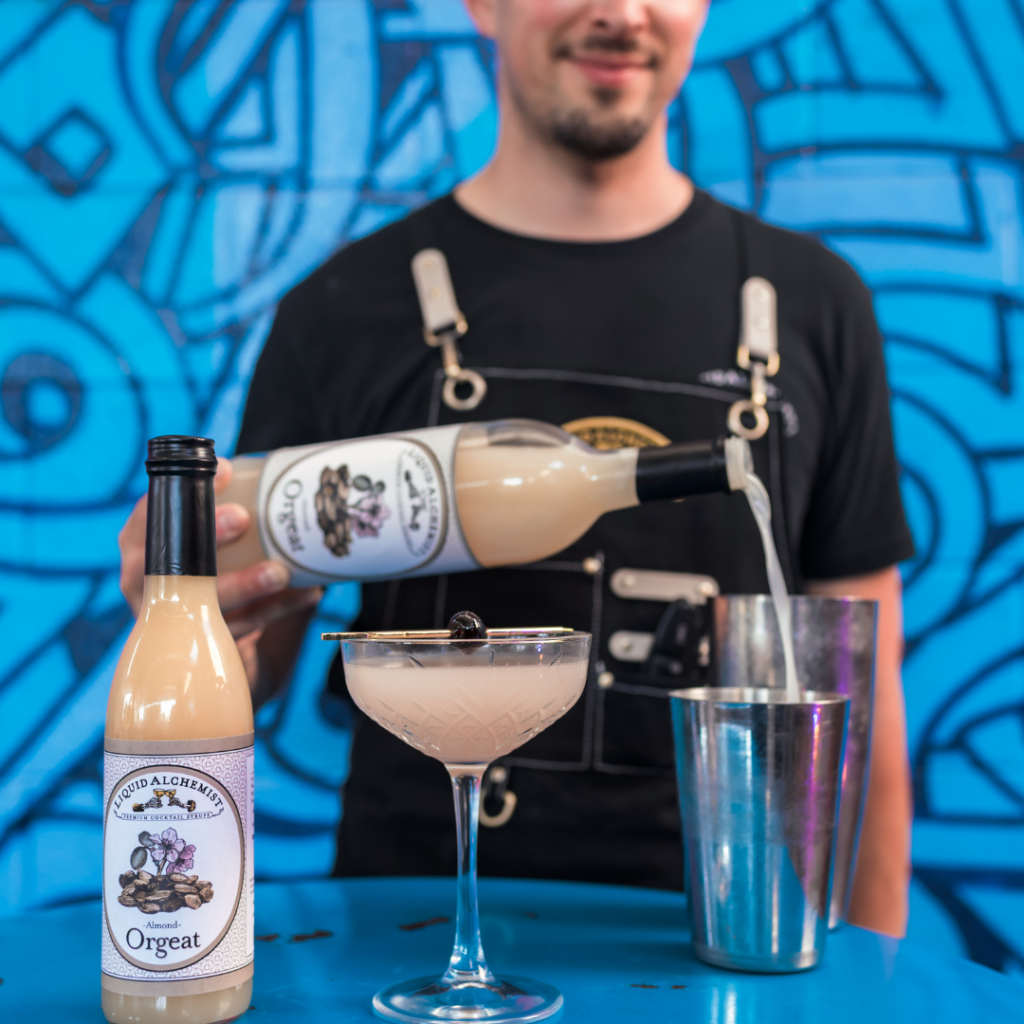
Tiki drinks were engineered systems, not assembled recipes. Donn Beach spent years calibrating the interaction between each element, which is why the drink’s ingredient count reflects precision rather than excess. Liquid Alchemist Almond Orgeat at ¼ oz can supplement or replace the honey syrup for a nuttier, more tiki-traditional variation—its almond oils add the same textural richness while reinforcing the falernum’s almond bridge.
If you want to explore more tiki builds and the full range of rum-forward technique, grab our free cocktail guide for recipes that go beyond the standard playbook.
For home bartenders who don’t stock allspice dram, a workable three-ingredient simplification keeps the drink’s essential architecture intact without requiring a specialty spirits purchase.
Replace allspice dram and honey syrup with Liquid Alchemist Falernum at ½ oz and a teaspoon of raw honey stirred directly into the shaker before adding ice. The falernum’s clove and ginger notes approximate the allspice dram’s spiced depth, and raw honey provides the body that honey syrup would otherwise deliver. The result loses some aromatic complexity but retains the drink’s defining spice-citrus-rum balance—and the garnish still spells V for Victory.
Donn Beach survived WWII and came home to the bar he’d built before it. He mixed his celebration into a cocktail, hid the recipe in a label-coded syrup jar, and let it almost disappear with him. That it exists at all is thanks to one tiki historian and a bartender’s notebook.
Liquid Alchemist Falernum is the syrup that holds this build together—and the Tiki Cocktail Syrup Gift Set includes Falernum, Almond Orgeat, and Passion Fruit for every variation the formula can hold. Use code TRYUS for 25% off plus free shipping on your first order.
It is Morse code for the letter V, which stood for Victory during World War II. Donn Beach created the drink after returning from military service in 1945 and named it to celebrate the Allied victory. The garnish—three maraschino cherries and a pineapple wedge—physically represents the code: three dots followed by one dash.
Donn Beach, born Ernest Raymond Beaumont Gantt, created the drink at his Don the Beachcomber restaurant in Hollywood after serving in the USAAF from 1942 to 1945. Because Beach was famously secretive about his recipes, the formula was nearly lost after his death in 1989. It was reconstructed by cocktail historian Jeff “Beachbum” Berry from a former bartender’s notebook and published in Sippin’ Safari in 2007.
Martinique rhum agricole is distilled from fresh sugarcane juice rather than molasses, producing grassy, funky aromatic compounds that differ significantly from standard rum. In the split rum base, agricole provides high-register aromatics while blended aged rum provides molasses depth and barrel weight. The combination produces layered complexity that a single rum can’t replicate—which is consistent with Donn Beach’s broader philosophy of using multiple spirits to build flavor range.
Allspice dram is difficult to substitute directly because its eugenol-dominant flavor profile—combining clove, cinnamon, and nutmeg in a single ingredient—is unique. A small pinch of ground allspice stirred into honey syrup approximates the flavor at lower intensity. Alternatively, increasing falernum to ½ oz and adding a dash of aromatic bitters captures the spice-and-warmth direction, though with different aromatic compounds. Neither substitution produces the same result as the original ingredient.
Flash blending means blending for a very short burst—roughly 3–5 seconds—with crushed ice, rather than a full blend cycle. It aerates the drink and integrates the ingredients without over-diluting or producing a slushy texture. The technique was standard in mid-century tiki bars and produces a slightly frothy, well-integrated result that shaking alone doesn’t replicate. If a blender isn’t available, vigorous shaking over crushed ice poured unstrained is a functional alternative.
It’s among the most ingredient-intensive classic tiki builds, alongside the Zombie and the Navy Grog. The complexity is structural—each ingredient occupies a distinct functional role rather than simply adding flavor volume. What distinguishes it from simpler tiki drinks is the three-sweetener system, which produces aromatic depth at multiple registers simultaneously rather than delivering a single flavor note at different intensities.
The Berry reconstruction, as adapted by Smuggler’s Cove, uses a 3:1 agricole-to-aged-rum ratio and orange juice as the citrus component. Paul McGee’s version, developed for his Chicago bar of the same name, equalizes the rum ratio and replaces orange juice with dry orange curaçao for more acidity and less sweetness. Both are legitimate interpretations; McGee’s reads slightly more spirit-forward, Berry’s more fruit-forward. The choice depends on whether you want the drink to lean tropical or structured.

Hurry—our Last Minute Stocking Stuffer Sale is your final chance to get 30% off and free shipping on orders over $35! Order by 12/14 to ensure delivery just in time for Christmas Eve. Don’t miss out on these festive favorites!
Get notified about new articles
Margarita Day Special
25% Off Prickly Pear, Blood Orange, Passion Fruit, Peach, Tamarindo, Strawberry, & Mango February 22 only
Kick off the new year with our Dry January Sale! From 12/27-1/15, enjoy 25% off on all featured flavors in our Dry & Damp Cocktail Guide, perfect for crafting delicious non-alcoholic and low-ABV drinks to help you start the year refreshed and on trend!
CODE: SMBIZ
CODE: BLKFRI