
Hurry—our Last Minute Stocking Stuffer Sale is your final chance to get 30% off and free shipping on orders over $35! Order by 12/14 to ensure delivery just in time for Christmas Eve. Don’t miss out on these festive favorites!

A cigar is one of the few sensory experiences that rewards patience—it evolves over 45 minutes to two hours, shifting from mild and sweet at the first third to richer, spicier, and more complex toward the finish. A drink chosen without understanding that progression either fights the cigar’s changing profile or flatlines beside it. A drink chosen well amplifies every note along the way.
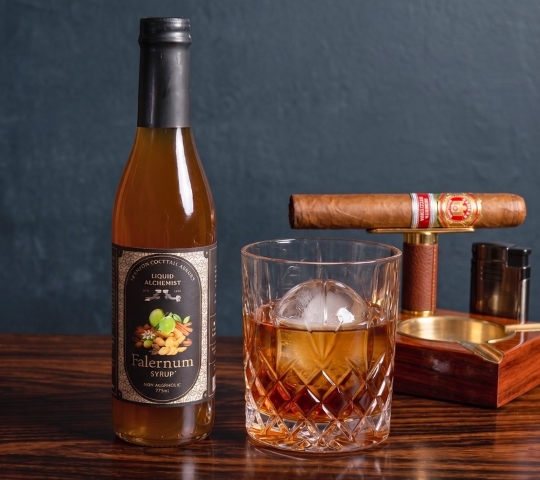
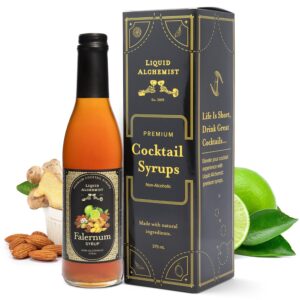
Liquid Alchemist Falernum was built for exactly this kind of company—clove, ginger, and almond in a single syrup, bridging the spice and sweetness that cigars most naturally seek in a companion. Below is the science behind why pairings work, a complete guide by cigar strength, and the cocktail and mocktail builds worth reaching for.
Flavor pairing isn’t intuition—it’s chemistry. Research underlying FlavorDB2, a comprehensive database of flavor molecules developed at IIIT Delhi, identifies how ingredients share aromatic compounds at a molecular level. Tobacco smoke contains vanillin, eugenol (also found in clove), and various caramelized sugar compounds—the same molecules that appear in aged rum, dark chocolate, and coffee. This is why those pairings feel inevitable rather than constructed.
The principle that governs all successful cigar pairings is intensity matching. As Havana House’s pairing guide documents, a pairing should complement and enhance without masking—which means the drink and the cigar must operate in the same intensity register. A delicate Connecticut-wrapped mild cigar disappears next to a peated Scotch. A full-bodied Maduro swallows a light spritz entirely.
Complementary pairing matches shared flavor compounds—a chocolate-noted Maduro with dark rum’s molasses, a cedar-forward cigar with a woody aged bourbon. The flavors reinforce each other because they’re built from similar molecules.
Contrasting pairing uses opposite flavor profiles to create balance—a spicy, pepper-forward cigar softened by a sweetened Old Fashioned, or a rich creamy cigar cut by coffee’s bitterness. The contrast refreshes the palate and makes both elements more perceptible.
Mild cigars are cream, cedar, and subtle sweetness—easy entry points that disappear beside aggressive spirits. As Havana House’s coffee pairing guide confirms, the simplest rule is intensity matching: mild cigars pair with light-bodied drinks that won’t overwhelm the tobacco’s nuance.
Best cocktail pairings: Rum Old Fashioned with Falernum, light honey whiskey sour, café-style coffee mocktail, cold brew with cream.
Avoid: Peated Scotch, overproof rums, heavy red wine, carbonated drinks that numb the palate.
Medium-bodied cigars develop spice, leather, and dried fruit as they progress—they can handle more complexity in the glass. This is the widest pairing range and the most forgiving for experimentation.
Best cocktail pairings: Bourbon Old Fashioned, Manhattan with Falernum, aged rum neat or on ice, coffee cocktail, espresso mocktail.
Avoid: Very sweet cocktails that mask the cigar’s development, highly acidic drinks that fight the leather notes.
Maduro wrappers are fermented longer, producing dark chocolate, espresso, black pepper, and earth. They need an equally assertive companion that shares those roasted, caramelized, spiced notes. As Cigar Country’s 2026 pairing guide notes, full-bodied cigars pair best with strong, bold spirits—aged Jamaican rum, full-proof bourbon, cognac, or a dark espresso.
Best cocktail pairings: Dark rum Boulevardier, Falernum-spiked rum Old Fashioned, espresso martini, cold brew with bitters.
Avoid: Light spirits, fruit-forward cocktails, anything too sweet or too cold.
Cigar Profile | Flavor Notes | Best Spirit | Best Cocktail | Best Mocktail |
Connecticut/Mild | Cream, cedar, subtle sweet | Irish whiskey, light rum | Honey whiskey sour | Cold brew with cream |
Habano/Medium | Spice, leather, dried fruit | Bourbon, aged rum | Manhattan, Old Fashioned | Espresso mocktail with Falernum |
Maduro/Full | Chocolate, espresso, pepper | Dark rum, cognac | Rum Boulevardier | Cold brew + bitters + Falernum |
Corojo/Spicy | Pepper, cedar, floral | Rye whiskey, mezcal | Rye Old Fashioned | Ginger + cold brew mocktail |
Connecticut Broadleaf | Earth, leather, dark fruit | Aged Scotch, añejo tequila | Boulevardier | Cherry bitters mocktail |
The conventional pairing is whiskey. The more defensible pairing, for many cigars, is coffee. Tobacco and coffee plants share the same growing geography—the equatorial belt that produces Cuban tobacco also produces Colombian and Ethiopian coffee beans. As Havana House documents, both contain earthy tones, a hint of spice, and faint acidity—flavor profiles that overlap and enhance rather than compete.
Coffee also solves a problem whiskey creates: alcohol numbs the palate at high doses, reducing the sensitivity to subtle tobacco notes in the cigar’s second and third thirds. Coffee’s bitterness cleansing, its caffeine-driven alertness, and its zero-proof nature means the palate stays sharp throughout a long smoke rather than dulling after 30 minutes.
Liquid Alchemist Falernum at ¼ oz stirred into cold brew concentrate, topped with sparkling water and a dash of non-alcoholic bitters, produces a cold, spiced, bitter-sweet companion that works across medium to full-bodied cigars. The clove and ginger in falernum echo the eugenol compounds in tobacco smoke—a complementary pairing grounded in shared molecular chemistry.
If one cocktail belongs in a cigar lounge, it’s the Old Fashioned. Its structure—spirit, bitters, sugar, ice—is intentionally restrained, which means it enhances rather than competes. The bitters provide aromatic complexity that bridges the spirit and the tobacco. The sugar softens both. The large ice format controls dilution so the drink evolves alongside the cigar rather than changing faster.
A Rum Old Fashioned with Liquid Alchemist Falernum in place of plain simple syrup adds the clove and almond notes that aged rum already hints at—amplifying the cigar’s spice notes through complementary chemistry rather than competing flavors. Liquid Alchemist Grenadine at ¼ oz alongside falernum in a Manhattan build adds pomegranate tartness that bridges the vermouth’s herbal bitterness and the cigar’s leather notes. For more cocktail builds and pairing technique, grab our free cocktail guide.
The most frequent mistake is over-sweetness. A cocktail loaded with simple syrup or fruit juice pushes the cigar’s flavor into the background by overwhelming the palate’s bitter and aromatic receptors. The drink should complement the tobacco’s complexity, not mask it.
The second is temperature. Very cold drinks numb the palate temporarily, reducing sensitivity to the cigar’s evolving flavor during the first few draws after each sip. Room-temperature spirits or drinks served over a single large cube—which dilutes slowly—preserve palate sensitivity far better than a drink packed with crushed ice.
Cigars reward drinks built with the same philosophy: patience, complexity, and restraint. The right pairing doesn’t announce itself—it simply makes each draw more interesting and each sip more complete.
Liquid Alchemist Falernum is the syrup most naturally suited to this world—and the Tiki Cocktail Syrup Gift Set adds Almond Orgeat and Passion Fruit for every variation the evening calls for. Use code TRYUS for 25% off plus free shipping on your first order.
There is no single best drink—the pairing depends on the cigar’s body and flavor profile. As a general principle, match intensity: mild cigars with lighter drinks, full-bodied cigars with assertive spirits or dark coffee. The most universally successful pairings across cigar strengths are bourbon Old Fashioneds, aged rum, and cold brew coffee—all of which share caramelized, roasted, or spiced flavor compounds with tobacco smoke.
For many smokers and many cigars, yes. Coffee and tobacco share earthy, roasted, and slightly acidic flavor profiles derived from the same equatorial growing regions. Coffee also preserves palate sensitivity throughout a long smoke, while high-alcohol spirits can gradually numb the flavors that make a cigar worth smoking in the first place. Neither is universally superior—the right choice depends on the cigar’s body and the drinker’s preference.
Excess sweetness saturates the palate’s bitter and aromatic receptors, reducing sensitivity to the complex, evolving notes in tobacco smoke. A cigar’s leather, cedar, chocolate, and spice notes become less perceptible when the palate is overwhelmed by sugar. The drink’s sweetness should accent the cigar’s existing sweetness—not replace it.
Cold brew with bitters and a spiced syrup (falernum works particularly well) covers medium to full-bodied cigars. A sparkling water with aromatic bitters and a citrus peel cleanses the palate without interfering with the tobacco’s flavor. Coffee-based mocktails generally outperform juice-forward mocktails with cigars because coffee’s bitterness functions as a complementary flavor bridge rather than a competing sweetness.
Vanilla, caramel, dark chocolate, espresso, clove, oak, leather, dried fruit, and cherry all appear in both tobacco smoke and the aged spirits most commonly paired with cigars. This overlap is explained by shared flavor molecules—vanillin, eugenol, and caramelized sugar compounds that appear in tobacco, aged wood barrels, roasted coffee, and dark chocolate simultaneously. Pairings built on these shared compounds feel coherent rather than arbitrary.
High carbonation can interfere with the palate’s sensitivity to tobacco smoke by temporarily numbing the taste receptors with CO₂. Light carbonation—sparkling water with bitters, for example—is fine and can cleanse the palate effectively between draws. The issue is highly carbonated, cold drinks consumed in large quantities alongside a cigar, which creates a palate-numbing effect similar to excessive alcohol.
A mild Connecticut-wrapped cigar paired with a honey whiskey sour or a café latte is the most accessible entry point. Both the cigar and the drink are low in intensity, share cream and sweetness as common notes, and neither overwhelms the other. From there, moving toward medium-bodied cigars with a bourbon Old Fashioned introduces complementary pairing at a manageable complexity level before advancing to full-bodied pairings.

Hurry—our Last Minute Stocking Stuffer Sale is your final chance to get 30% off and free shipping on orders over $35! Order by 12/14 to ensure delivery just in time for Christmas Eve. Don’t miss out on these festive favorites!
Get notified about new articles
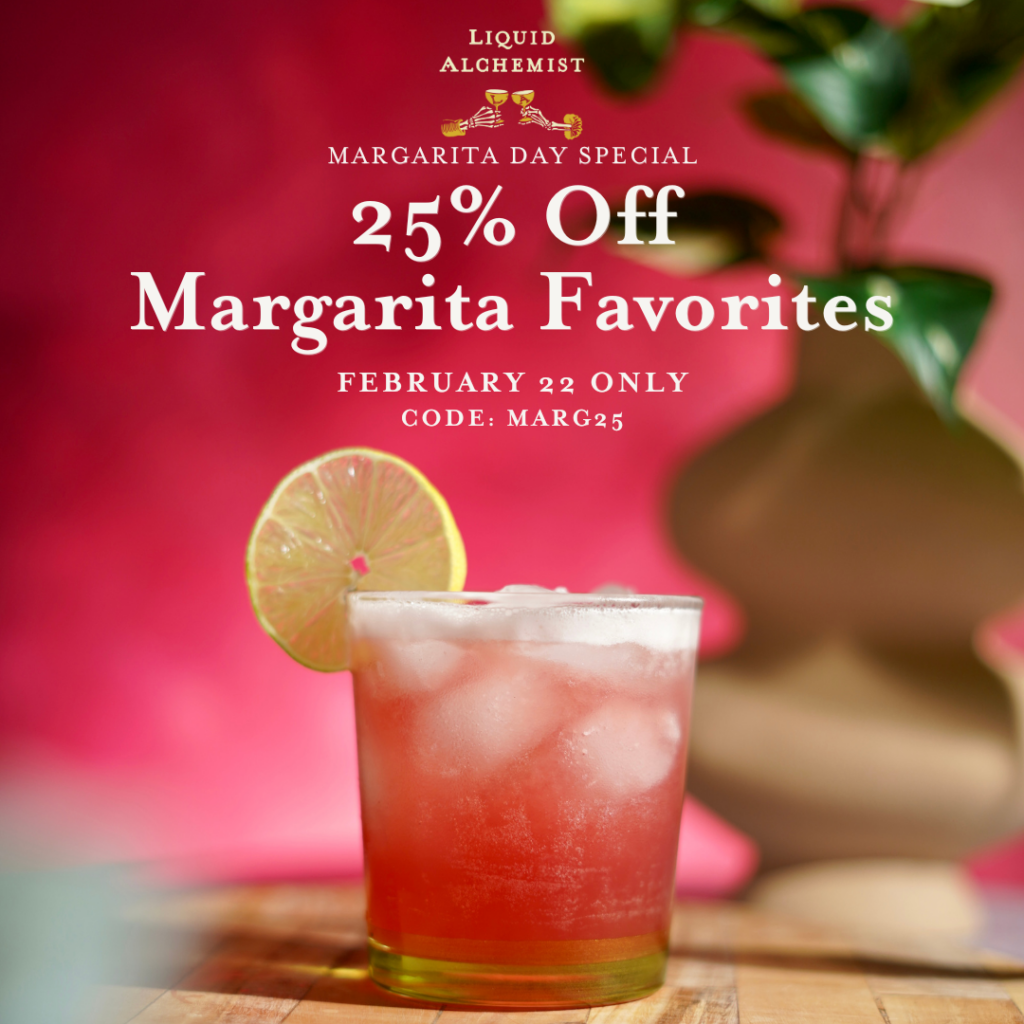
Margarita Day Special
25% Off Prickly Pear, Blood Orange, Passion Fruit, Peach, Tamarindo, Strawberry, & Mango February 22 only
Kick off the new year with our Dry January Sale! From 12/27-1/15, enjoy 25% off on all featured flavors in our Dry & Damp Cocktail Guide, perfect for crafting delicious non-alcoholic and low-ABV drinks to help you start the year refreshed and on trend!
CODE: SMBIZ
CODE: BLKFRI