
Hurry—our Last Minute Stocking Stuffer Sale is your final chance to get 30% off and free shipping on orders over $35! Order by 12/14 to ensure delivery just in time for Christmas Eve. Don’t miss out on these festive favorites!

Every island in the Caribbean has a signature rum. Most of them end up in a glass with pineapple. This isn’t coincidence—it’s convergence. Two ingredients that spent centuries in the same geography, grown by the same people, served at the same gatherings, until the pairing became so intuitive that Caribbean hospitality and rum with pineapple became nearly synonymous.
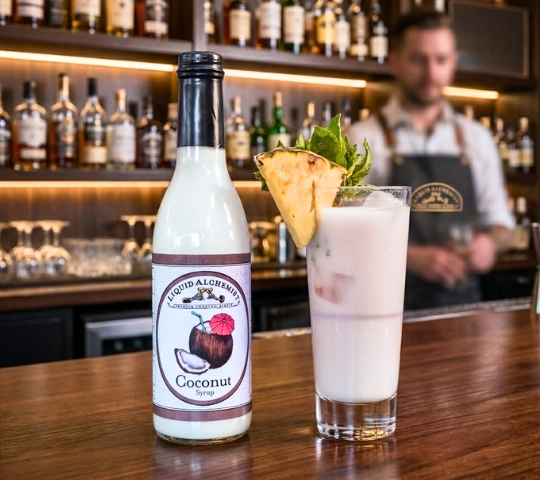
Liquid Alchemist Coconut bridges those two island staples in a single ingredient—adding the third point of the tropical triangle without requiring coconut rum’s low proof or cream’s heavy texture. Below is the full recipe, the cultural history that makes this combination deeper than a simple cocktail, and every variation from a quick two-ingredient pour to a batch build for a crowd.
Pineapple’s relationship with the Caribbean goes back to its first encounter with European explorers. As the Smithsonian Libraries documents, Columbus encountered the fruit on the island of Guadeloupe in 1493—the Tupi-Guaraní people had been cultivating it for millennia and called it nanas, meaning “excellent fruit.” Caribbean peoples placed pineapples at the entrances of their dwellings as symbols of hospitality and welcome, a tradition that traveled with the fruit back to Europe and eventually into colonial American architecture.
Rum followed the same routes. Distilled from Caribbean sugarcane molasses beginning in the 17th century, it became the region’s defining spirit. As Got Rum Magazine documents, colonial distillers were soaking pineapple in rum barrels by the 1700s—both for flavor and as a practical substitute for limes in preventing scurvy on long voyages. The combination predates every cocktail trend by two centuries.
This is the build you’ll find at beach bars from Barbados to the British Virgin Islands—rum, pineapple, coconut, lime, over ice. The version below uses coconut syrup rather than coconut rum, which keeps the proof high and the sweetness controlled.
Combine all ingredients in a shaker with ice. Shake and strain into a rocks glass over a large ice cube. Garnish with a pineapple wedge and expressed lime peel.
Rum Style | Flavor Profile | Best Build For |
Light white rum | Clean, neutral, pineapple-forward | Daiquiri-style, minimalist |
Aged Jamaican | Funky, molasses-rich, complex | Island standard, most versatile |
Barbadian (Bajan) | Smooth, dry, refined | Hosting, crowd-friendly |
Agricole rhum | Grassy, sugarcane, aromatic | Sophisticated variation |
Overproof | Intense, spirit-forward | Punch bowls, batching |
The rum and pineapple cocktail is the rare drink that scales equally well from a single glass to a punch bowl. The flavor holds across dilution because pineapple’s acid and sweetness are stable—unlike fresh herbs or muddled fruit, which degrade over time. This is why beach bars batch it by the gallon and it still tastes like it was made to order.
Research on flavor pairing networks confirms that rum’s fermentation ester profile shares aromatic bridges with pineapple’s tropical compounds—the combination integrates at a molecular level rather than simply coexisting in the same glass. The coconut syrup’s medium-chain fatty acids add a third aromatic layer that rounds the pineapple’s acidity without reducing it, which is why the three-ingredient tropical profile feels complete rather than sweet.
Combine without ice and refrigerate up to 48 hours. Shake individual servings over ice or pour over a large block in a punch bowl at service. The batch actually improves overnight as the flavors integrate—a rare quality in cocktail batching.
different drink, and the choice matters more than most recipes acknowledge.
Coconut rum (typically 21% ABV) reduces the drink’s proof and adds considerable sweetness alongside coconut flavor. It’s the accessible option but produces a softer, more one-dimensional result.
Coconut cream shifts the drink toward piña colada territory—rich, heavy, and cold-blended rather than built over ice.
Coconut water adds tropical flavor and natural electrolytes with essentially no sweetness, producing the lightest possible coconut note.
Liquid Alchemist Coconut sits between cream and water—coconut flavor with enough body to affect mouthfeel, used at ½ oz where it contributes without dominating. For more tropical cocktail builds and technique, grab our free cocktail guide.
The core formula adapts across the Caribbean’s rum spectrum—each island’s spirit tradition produces a different but equally legitimate version of the same drink.
Liquid Alchemist Falernum at ¼ oz in place of the coconut syrup shifts the build toward Barbadian tradition—clove, ginger, and almond adding the spiced complexity that characterizes Eastern Caribbean rum culture. This version is less tropical-sweet and more aromatic, a better match for refined aged rum than for light white.
Liquid Alchemist Mango at ¼ oz alongside the coconut syrup extends the tropical fruit layer with mango’s tart sweetness. The two fruits share enough aromatic compound bridges that they integrate rather than competing—the result reads as a more complex version of the standard build rather than a different drink.
Pour the base (rum, lime, coconut syrup) over ice first. Slowly add pineapple juice and then float Liquid Alchemist Grenadine over the back of a spoon for a layered gradient—deep red at the base, golden-orange above. This version is built for presentation and works particularly well when hosting; the visual impact makes it the drink everyone at the table orders second.
The rum and pineapple cocktail doesn’t belong to a single island, a single bartender, or a single decade. It belongs to the Caribbean as a whole—a region that built its drink culture around what the land and sea provided, long before cocktail menus existed. The fact that it’s also one of the easiest drinks to make well is not incidental. It’s why it endures.
Liquid Alchemist Coconut is the island’s third ingredient in a bottle. The Tiki Cocktail Syrup Gift Set adds Falernum, Almond Orgeat, and Passion Fruit for every variation the build can hold. Use code TRYUS for 25% off plus free shipping on your first order.
Aged rum contributes barrel notes—vanilla, caramel, toasted oak—that create a richer, more layered interaction with pineapple’s tropical sweetness. White rum is neutral and lets pineapple lead entirely, which works for bright, citrus-forward builds but reads one-dimensional alongside coconut. For an island-style cocktail where depth matters as much as refreshment, aged rum is the more interesting choice.
A mid-range Barbadian or Jamaican aged rum—something in the 5–10 year range—produces the best results at volume. It has enough complexity to hold its own against pineapple’s sweetness without the intensity of overproof rum or the delicacy of agricole that gets lost in a large batch. Appleton Estate 8, Mount Gay Eclipse, or Plantation 5 Year all perform consistently at batched scale.
Yes, with a calibration adjustment. Canned and commercial pineapple juice is more consistent than fresh but typically runs sweeter. Reduce the coconut syrup to ¼ oz and eliminate any simple syrup in variations that call for it. The flavor will be slightly flatter than cold-pressed but perfectly serviceable for batching, where consistency matters more than peak freshness.
Angostura bitters originated in Trinidad and have been a staple of Eastern Caribbean rum drinks for nearly two centuries. In a rum and pineapple cocktail, the bitters add bitter aromatic complexity that prevents the drink from reading as purely sweet—the same structural function they perform in an Old Fashioned. Two dashes is sufficient; more than that and the bitters become a flavor note rather than a background element.
They share rum and pineapple as core ingredients, but the structure diverges significantly. A piña colada uses coconut cream for richness and is typically blended, producing a thick, sweet, cold dessert drink. The island rum and pineapple build uses coconut as a light aromatic note over ice, preserving the drink’s refreshment and spirit-forward character. One is a vacation indulgence; the other is a daily island drink.
Younger and lighter rums let pineapple lead—the drink is bright, tropical, and fruit-forward. Aged rums contribute barrel notes (vanilla, caramel, oak) that add complexity and create a richer interaction with pineapple’s sweetness. Overproof rums introduce intensity that requires more citrus acid to balance. The style of rum is arguably the single most important variable in this build—more so than the pineapple format or the secondary syrups.
Two ingredients, no shaker required: 2 oz dark rum poured over ice in a highball glass, topped with 4 oz cold-pressed pineapple juice, squeezed lime garnish. No syrup, no tools, no technique. It’s the version you’d get at a beach shack in Jamaica or Barbados—unpretentious, cold, and exactly right.

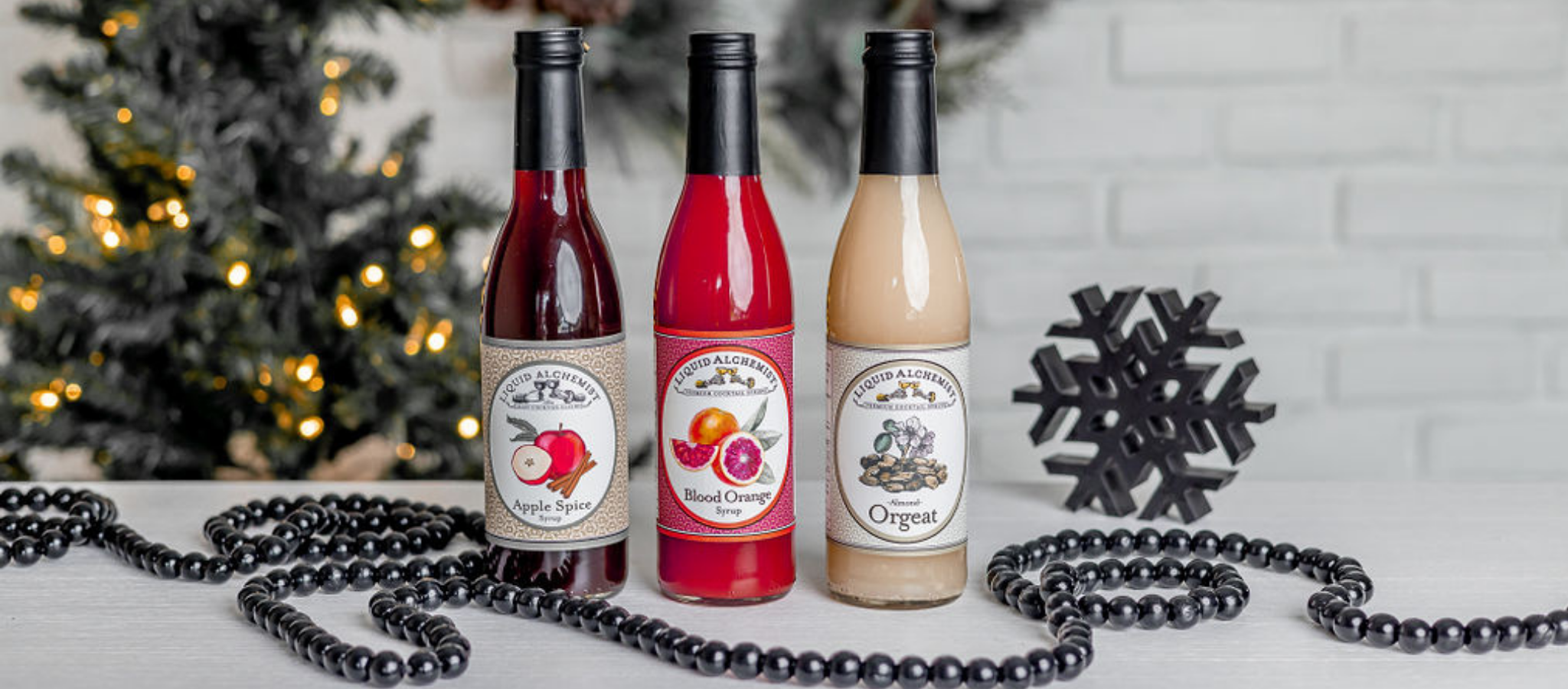
Hurry—our Last Minute Stocking Stuffer Sale is your final chance to get 30% off and free shipping on orders over $35! Order by 12/14 to ensure delivery just in time for Christmas Eve. Don’t miss out on these festive favorites!
Get notified about new articles
Margarita Day Special
25% Off Prickly Pear, Blood Orange, Passion Fruit, Peach, Tamarindo, Strawberry, & Mango February 22 only
Kick off the new year with our Dry January Sale! From 12/27-1/15, enjoy 25% off on all featured flavors in our Dry & Damp Cocktail Guide, perfect for crafting delicious non-alcoholic and low-ABV drinks to help you start the year refreshed and on trend!
CODE: SMBIZ
CODE: BLKFRI